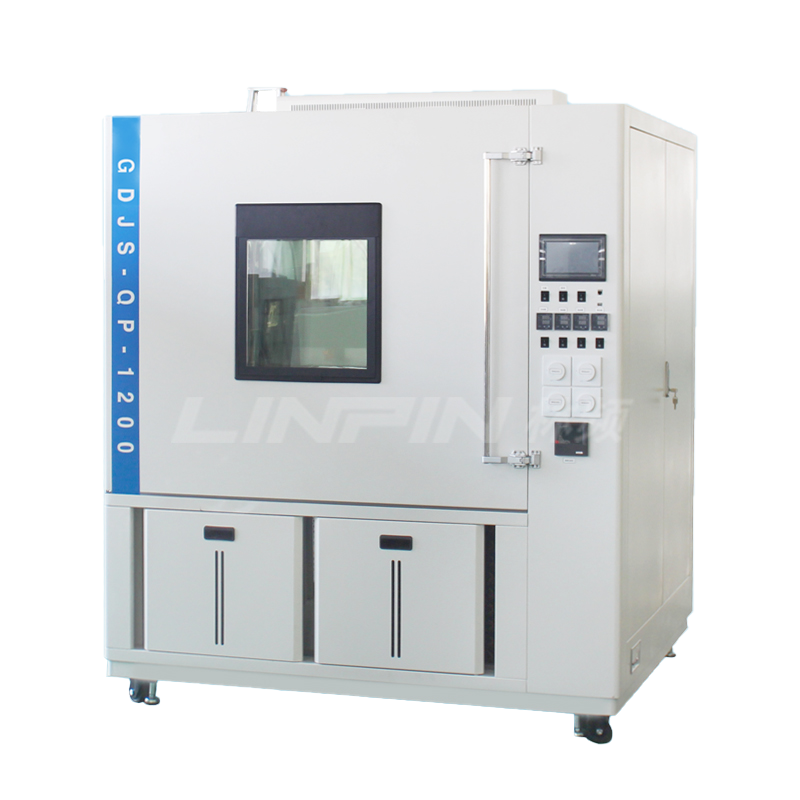
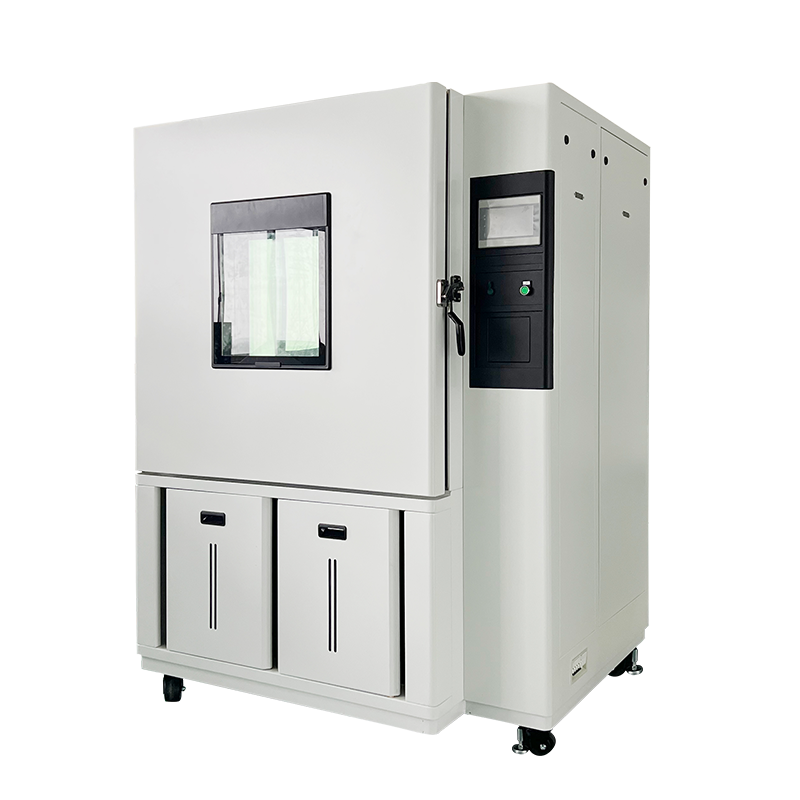
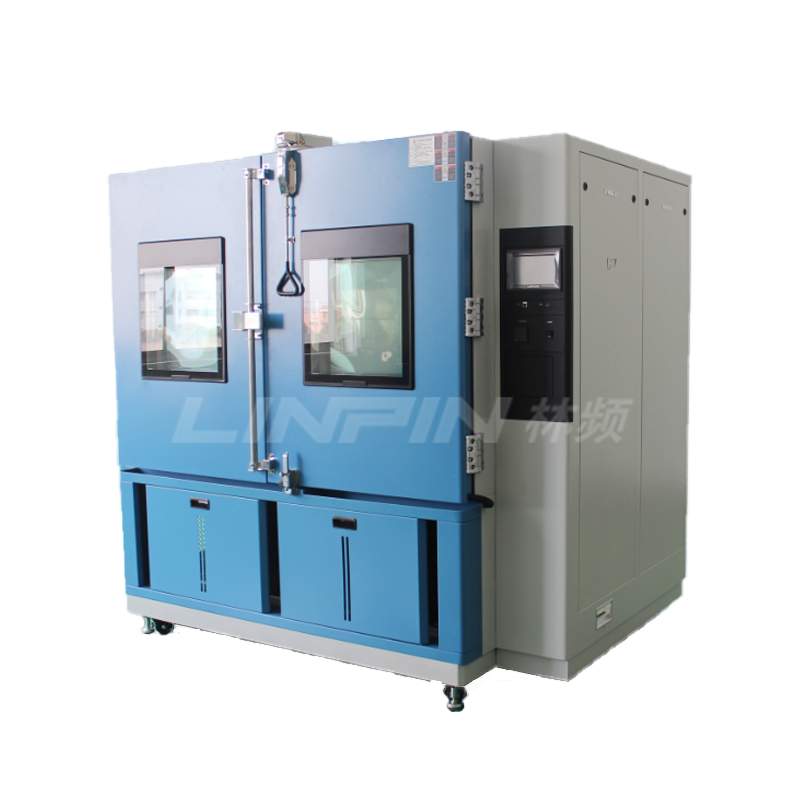
When a cold and hot shock test chamber, which has been running smoothly, suddenly stops cooling, what could be the reason? Today, Linpin Instruments will share with you several causes of this issue.
Before diving into the reasons for the cooling failure, it is essential to understand the working principle of the refrigeration system in the test chamber. The high and low-temperature refrigeration cycles of the test chamber utilize the reverse Carnot cycle. The refrigerant is compressed adiabatically by the compressor to a higher pressure, which increases the exhaust temperature. The refrigerant then exchanges heat with the surrounding medium through the condenser, transferring heat to the surrounding environment. After that, the refrigerant undergoes adiabatic expansion through the throttling valve, doing work and reducing its temperature. Finally, the refrigerant absorbs heat from the high-temperature object through the evaporator, lowering the temperature of the object to be cooled. This continuous cycle achieves the cooling effect.
If the test chamber is not cooling properly, the first step is to check whether the refrigeration compressor is malfunctioning. Ensure that the compressor is operating normally. In daily use, it is crucial to maintain stable power supply current and voltage to avoid instability in the electrical control switch. For stainless steel cold and hot shock test chambers, you should check whether the refrigeration compressor pressure is within the normal range and inspect the refrigeration switch. If there is a crack in the valve stem of the hot gas bypass solenoid valve, the solenoid valve needs to be replaced promptly, and the switch should be recharged with refrigerant to ensure normal operation. Additionally, check whether the refrigerant quantity in the main refrigeration unit is sufficient. If the exhaust and suction pressures of the low-temperature compressor in the two refrigeration units are lower than normal values, and the suction pressure is in a vacuum state, the refrigerant quantity needs to be adjusted. Another possible cause is a lack of refrigerant. By touching the exhaust and suction pipes of the compressor, if the exhaust pipe is not hot and the suction pipe is not cold, it indicates that the refrigerant needs to be replenished.
Through the above analysis, you should now have a clear understanding of the reasons why a cold and hot shock test chamber may stop cooling. Understanding the causes is the first step in solving the problem. Timely troubleshooting and resolution can help maintain the reliability and accuracy of the test chamber.








Copyright © 2025 Shanghai Linpin Instrument Co., Ltd Copyright
| ICP Number:Shanghai ICP Record No. 12029585-7
| Sitemap






 EN
EN
 中文
中文 Pусский
 Tiếng Việt
 ภาษาไทย
 پاکستانی زبان