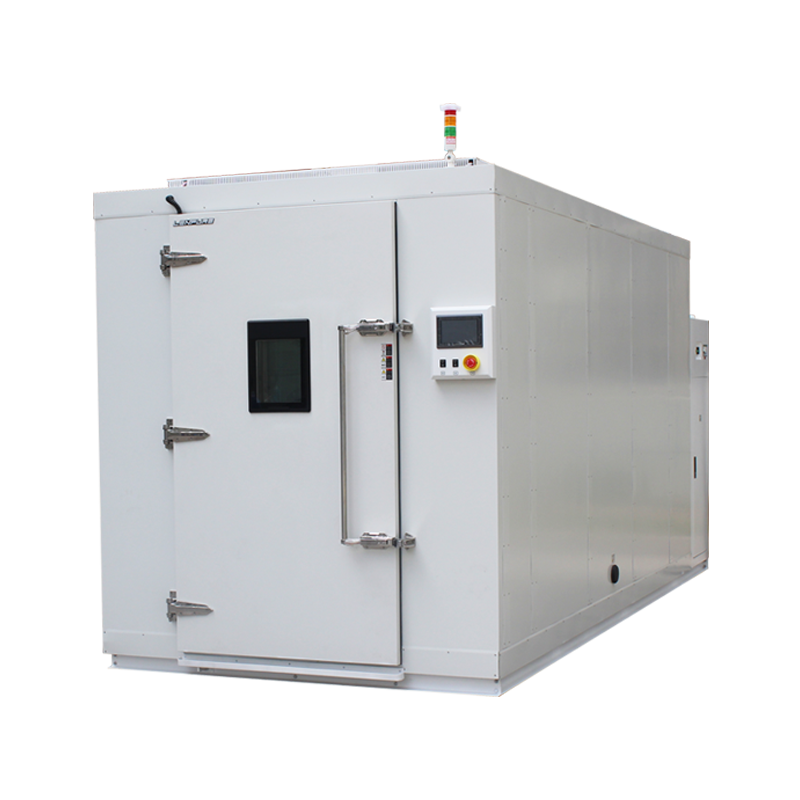
Regularly, staff should master some troubleshooting and handling methods for high and low temperature alternating test chambers. If the equipment exhibits unstable low temperatures, what causes this phenomenon, and how should we address these faults?
Check the Electrical System of the Equipment
If the refrigeration compressor can start normally during operation, it indicates that the issue is not related to the electrical system.

Verify Whether the Refrigerant in the Refrigeration System Is Sufficient
During operation, inspect the temperature of the compressor’s exhaust and suction pipes. If the exhaust pipe temperature is not high and the suction pipe temperature is not low, it suggests a lack of refrigerant.
Inspect the Main and Auxiliary Units
When both the main and auxiliary units are operating simultaneously, the cooling rate of the equipment is relatively high. In the initial stage of temperature maintenance, both units work together. Once the temperature stabilizes, the main unit alone maintains the cooling and stability, while the auxiliary unit stops. If the main unit has a refrigerant leak, its cooling efficiency will weaken. Since both units operate together during cooling, unstable temperatures will not occur, but the cooling rate will decrease. During temperature maintenance, if the main unit fails to cool and the auxiliary unit is inactive, the temperature inside the chamber will gradually rise. When it reaches a certain level, the control system will activate the auxiliary unit to lower the temperature. Once the temperature drops sufficiently, it re-enters the maintenance phase. This cycle repeats, resulting in unstable low temperatures.
After identifying the cause of unstable low temperatures in the test chamber, what measures should be taken to resolve it?
For electrical system issues, technicians should repair the system.
If the refrigerant is insufficient, technicians should replenish it.
For problems with the main and auxiliary units, a combination of soapy water and leak detection devices can be used to locate leaks. Once found, the leaks should be repaired or the components replaced.







Copyright © 2025 Shanghai Linpin Instrument Co., Ltd Copyright
| ICP Number:Shanghai ICP Record No. 12029585-7
| Sitemap






 EN
EN
 中文
中文 Pусский
 Tiếng Việt
 ภาษาไทย
 پاکستانی زبان