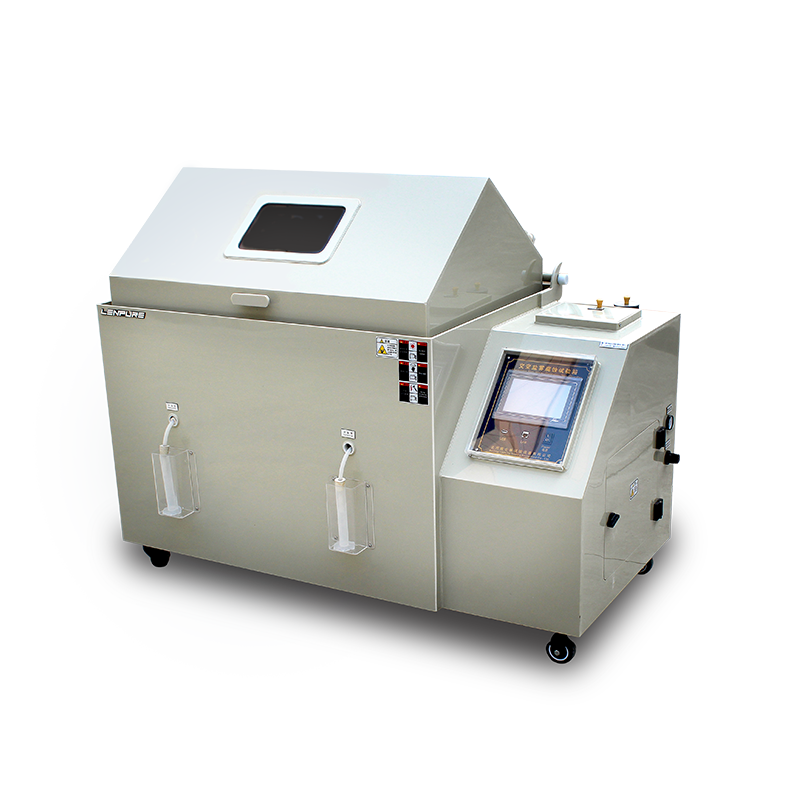
As a testing equipment that simulates atmospheric corrosion environments, the salt spray test chamber, like other devices, has specific operational requirements for personnel during use. These requirements ensure smooth and accurate testing, guarantee personnel safety, prevent equipment damage, and extend service life.
The salt spray test chamber is sealed with water. Before testing, an appropriate amount of pure water or distilled water should be added to the water trough on top of the chamber. The heating water trough and air saturator of the equipment must also be replenished with water in a timely manner to prevent damage to components during the heating process.
Before testing, it is necessary to inspect whether the water pipes of the sprayer, the exhaust pipe, and the connecting pipes to the air source are properly connected. This ensures normal supply of salt solution and air source, smooth exhaust of mist without leakage, and ideal test results.
When placing samples, they should maintain a certain distance from the inner walls of the chamber. Different samples should also be spaced apart, with each item placed evenly, and the tested area must not be less than 98%.
The salt spray test chamber cannot be interrupted during operation. If it is necessary to observe and record test samples or add test solvents, requiring the test chamber door to be opened, a brief pause can be implemented. The saltwater solvent or acidic saltwater solvent used in the test has high concentration and strong corrosiveness. Operators must protect themselves before opening the chamber door during the test, especially exposed areas such as hands and face, to prevent harm from salt spray to the human body.
For the same test, it is best to select the same type of samples or samples with the same test cycle. Otherwise, due to different corrosion resistance of different materials, when placed together for testing, some items may already show corrosion points requiring test termination, while others have not yet reacted, making synchronization impossible.
The above covers the main points of precautions for using the salt spray test chamber. It is recommended that before use, you carefully read the instruction manual and have a thorough understanding of every detail to enable this equipment to perform better.


24.07







Copyright © 2025 Shanghai Linpin Instrument Co., Ltd Copyright
| ICP Number:Shanghai ICP Record No. 12029585-7
| Sitemap







 EN
EN
 中文
中文 Pусский
 Tiếng Việt
 ภาษาไทย
 پاکستانی زبان