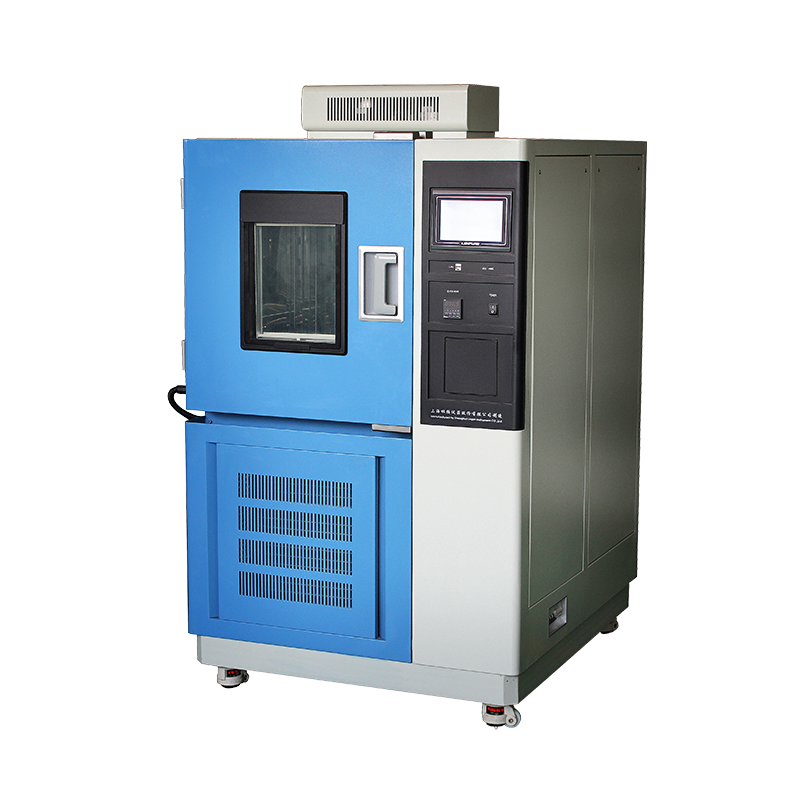
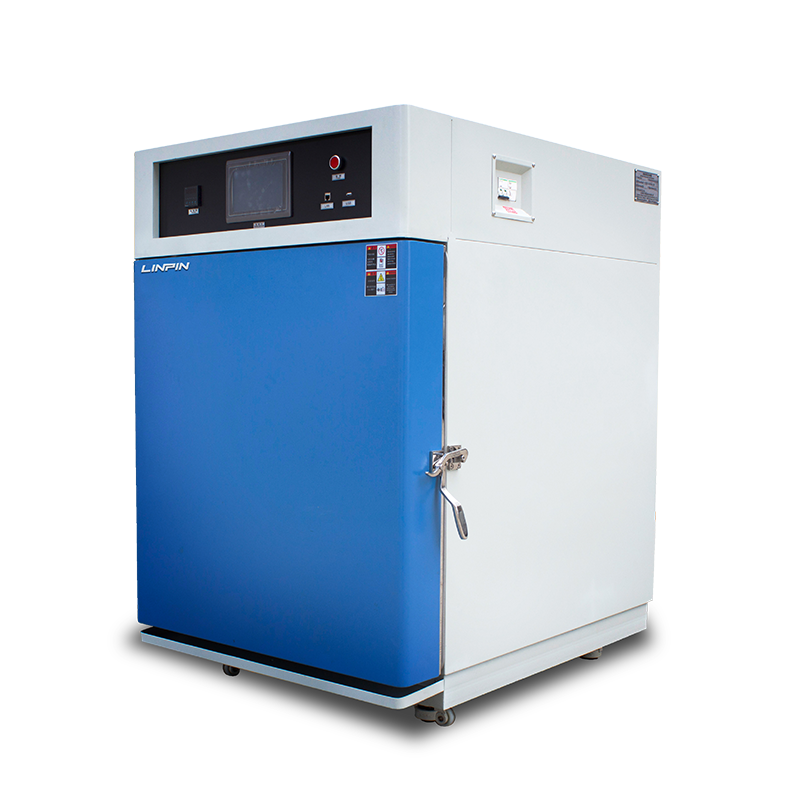
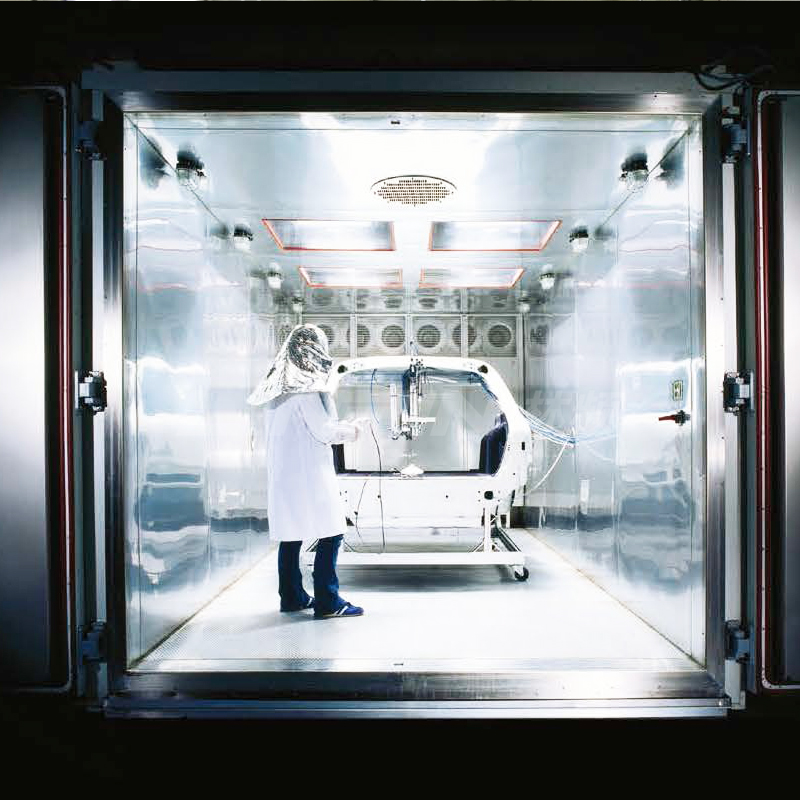
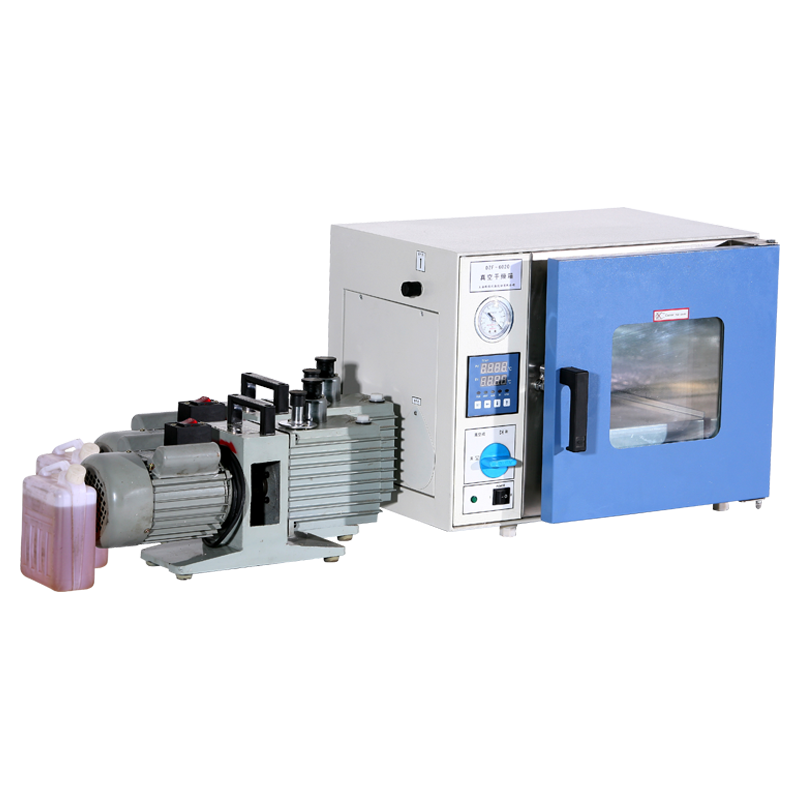
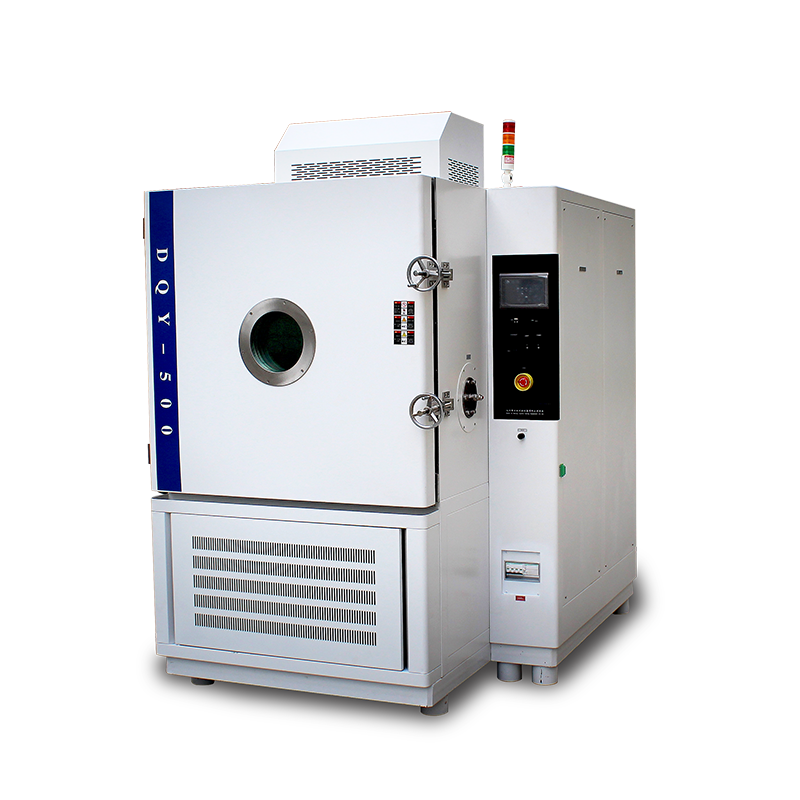
A xenon lamp aging test chamber is used to simulate natural environmental conditions such as sunlight, rain, and biodegradation, which continuously degrade products. To ensure product durability, this equipment artificially replicates these conditions to test whether the product meets quality standards.
The xenon lamp aging test chamber can simulate and intensify key climatic factors, including solar radiation, ambient temperature, rainfall or condensation, and humidity. It uses xenon arc lamps that replicate full-spectrum sunlight to reproduce the damaging light waves found in various natural environments.

Xenon lamp aging test chambers are classified into two types: water-cooled and air-cooled. Let’s examine their pros and cons.
1. Water-Cooled Type
Advantages:
The xenon lamp is installed vertically in the center of the chamber, with a rotating sample rack surrounding it.
This design ensures that all samples maintain the same distance from the lamp, guaranteeing uniform radiation exposure and excellent comparability.
Disadvantages:
The rotating mechanism makes the equipment bulky.
Requires additional cooling water systems and pure water filtration, increasing cost.
The water-cooled xenon lamps themselves are more expensive to replace.
2. Air-Cooled Type
Advantages:
The xenon lamp is installed horizontally at the top of the chamber, while the sample rack is placed in the center.
The distance between samples and the lamp can be adjusted based on sample size, offering greater flexibility.
Simpler structure, larger testing space, and more cost-effective.
Ideal for irregularly shaped or oversized samples.
Disadvantages:
Samples at the edges receive weaker radiation than those in the center.
Requires periodic repositioning of samples during testing to ensure uniform exposure.
Selection Recommendation
Water-cooled chamber is recommended for small, uniform, and regularly shaped samples (e.g., sheets, strips).
Air-cooled chamber is better suited for irregular, large, or difficult-to-sample products.
This guide helps you quickly determine the best xenon lamp aging test chamber for your needs!









Copyright © 2025 Shanghai Linpin Instrument Co., Ltd Copyright
| ICP Number:Shanghai ICP Record No. 12029585-7
| Sitemap






 EN
EN
 中文
中文 Pусский
 Tiếng Việt
 ภาษาไทย
 پاکستانی زبان