The industrial manufacturing sector imposes increasingly stringent requirements on the corrosion resistance of materials. As a critical apparatus for simulating marine and industrial atmospheric corrosion environments, the salt spray testing machine has become an irreplaceable technical instrument within product quality control systems. Through accelerated corrosion testing, this equipment enables the evaluation of corrosion resistance capabilities of metallic materials and their protective coatings within a relatively short timeframe, thereby providing scientific foundations for product development, process optimization, and quality certification.
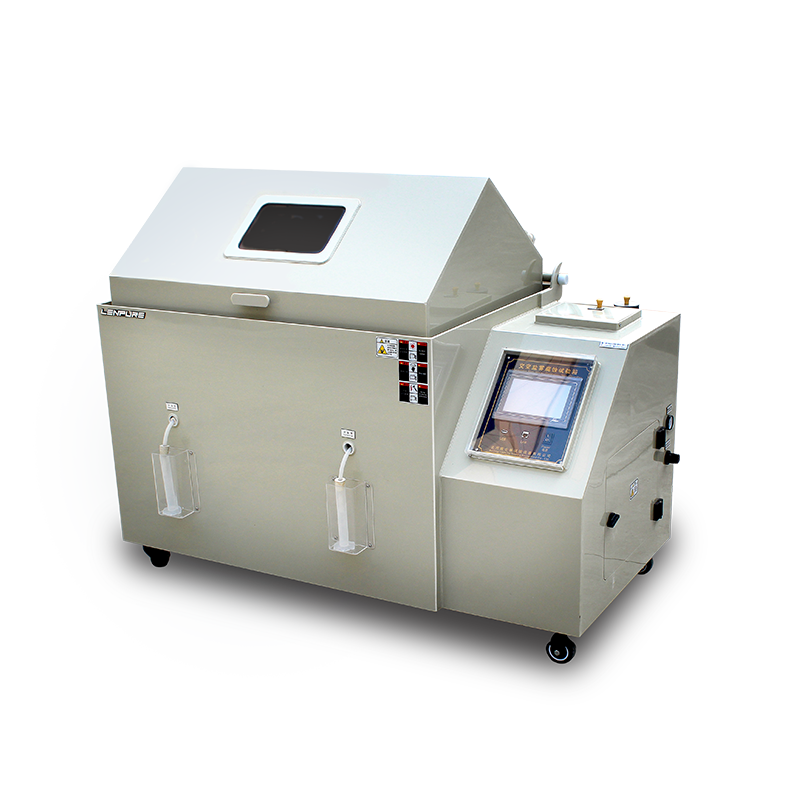
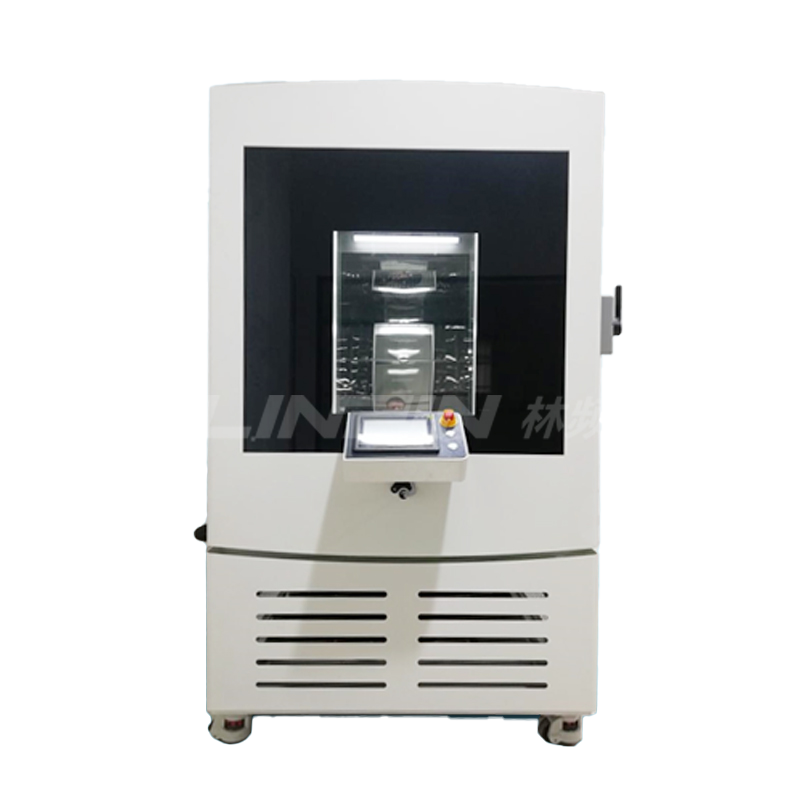
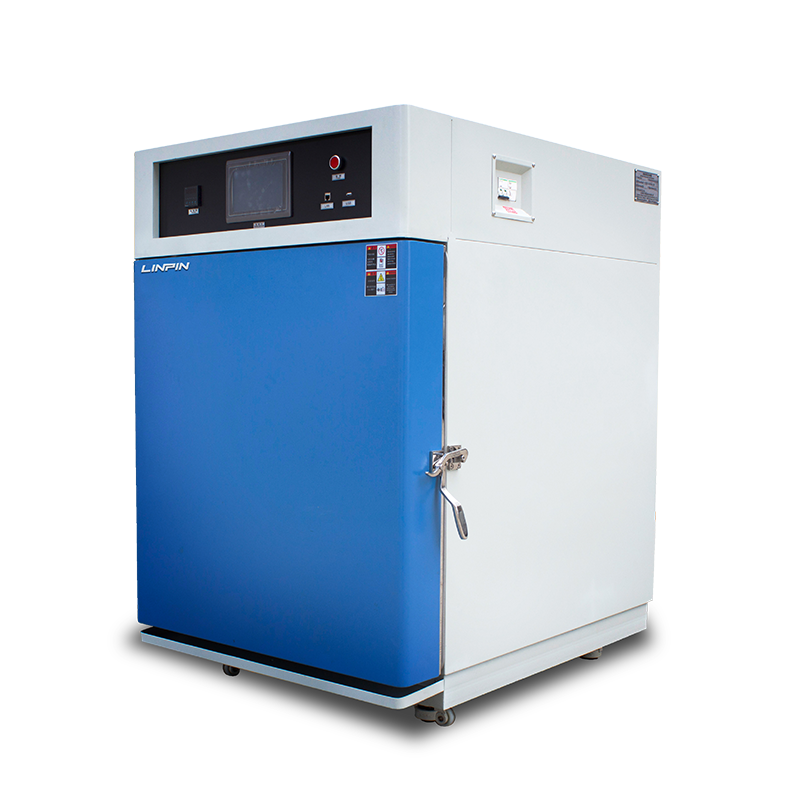
From the perspective of equipment configuration, modern salt spray testing machines primarily comprise five functional modules: the testing chamber, spray system, heating and temperature control apparatus, air supply system, and electrical control system. The testing chamber is typically fabricated from corrosion-resistant materials and equipped with specimen support racks, with its design balancing uniform spray distribution against the convenience of specimen placement and removal. Serving as the core component, the spray system atomizes prepared sodium chloride solution through compressed air to generate a salt mist environment conforming to standardized requirements. The heating apparatus maintains the constant temperature necessary for testing, while the precision temperature control system ensures that chamber temperature fluctuations remain within permissible standard limits. The stability of the air supply system directly influences the uniformity of salt mist deposition, whereas the electrical control system facilitates precise parameter setting and comprehensive operational monitoring.
The technical standardization framework for salt spray testing has evolved over decades to reach a state of considerable maturity. Standards promulgated by the International Organization for Standardization (ISO 9227), the American Society for Testing and Materials (ASTM B117), and China’s national standard GB/T 10125 all provide detailed stipulations regarding testing conditions, solution preparation, equipment calibration, and result evaluation. These standards not only regulate operational procedures but also ensure data comparability and reproducibility across different laboratory facilities. Notably, various industries, based on differences in product service environments, frequently establish more stringent internal specifications atop foundational standards; the automotive, aerospace, and electrical appliance sectors, for instance, each maintain their own supplementary requirements.
The preparation of testing solutions constitutes a critical factor influencing result accuracy. Conventional neutral salt spray testing employs aqueous sodium chloride solution at a mass fraction of 5%, with solution pH adjusted to between 6.5 and 7.2. For acetic acid salt spray testing and copper-accelerated acetic acid salt spray testing, glacial acetic acid and copper chloride must be added respectively to intensify corrosive effects. Solutions demand exceptionally high purity, with impurity ion concentrations in water subject to strict control; otherwise, extraneous variables may be introduced that compromise testing results. Regular replacement of testing solutions and cleaning of salt solution filters and nozzles represent essential maintenance measures for sustaining normal equipment operation.
At the operational level, specimen pretreatment and placement methodology directly impact testing validity. Specimen surfaces require degreasing, cleaning, and drying treatment to prevent extraneous contaminants from interfering with corrosion processes. Specimens are typically positioned at inclinations of 15 to 30 degrees from vertical orientation to ensure uniform salt mist deposition and unimpeded drainage of condensate. Appropriate spacing between specimens must be maintained to prevent mutual shielding that could cause uneven salt mist distribution. Opening the chamber cover during testing is strictly prohibited, as this would disrupt environmental stability within the chamber and induce temperature fluctuations.
With advancing materials science, salt spray testing technology continues to undergo innovation. Cyclic corrosion testing methodology combines salt spray, dry, and humid thermal conditions in programmed cycles, more authentically simulating the complex corrosion processes encountered in actual service environments. Certain advanced equipment has integrated intelligent control systems capable of automatic recording of testing parameters, remote equipment status monitoring, and generation of comprehensive testing reports through data analysis software. These technological advances have substantially enhanced testing efficiency and data reliability.
Nevertheless, as an accelerated corrosion methodology, salt spray testing exhibits certain disparities between its results and actual natural exposure corrosion. Although high-concentration salt mist environments under laboratory conditions enable rapid screening of material corrosion resistance, they cannot fully replicate the synergistic effects of combined factors in nature, including temperature variation, ultraviolet radiation, and wet-dry cycling. Consequently, when interpreting testing data, comprehensive judgment incorporating actual material service environments is required, avoiding simplistic extrapolation of testing results to long-term service performance.
For equipment operating organizations, establishing comprehensive maintenance protocols proves paramount. Regular calibration of temperature sensors, salt mist deposition collection apparatus, and other critical components ensures measurement traceability; inspection of pneumatic system integrity prevents pressure fluctuations from affecting spray performance; periodic cleaning of scaling-prone components such as saturated air buckets and brine tanks extends equipment service life. Only through the combination of standardized operation and meticulous maintenance can the technical value of salt spray testing equipment be fully realized, providing robust assurance for material corrosion resistance evaluation.
25.03








Copyright © 2025 Shanghai Linpin Instrument Co., Ltd Copyright
| ICP Number:Shanghai ICP Record No. 12029585-7
| Sitemap







 EN
EN
 中文
中文 Pусский
 Tiếng Việt
 ภาษาไทย
 پاکستانی زبان