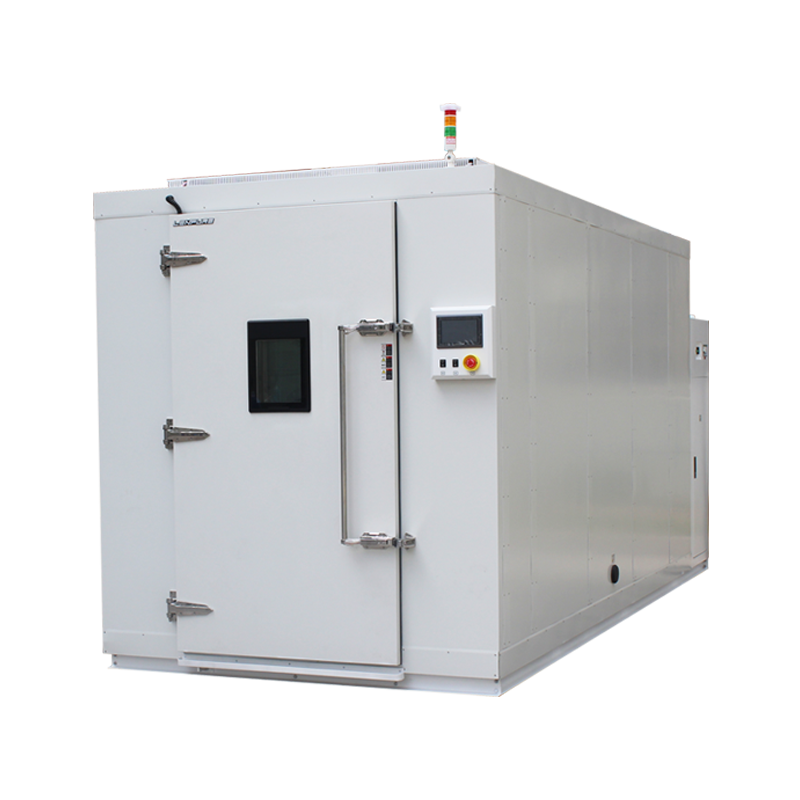
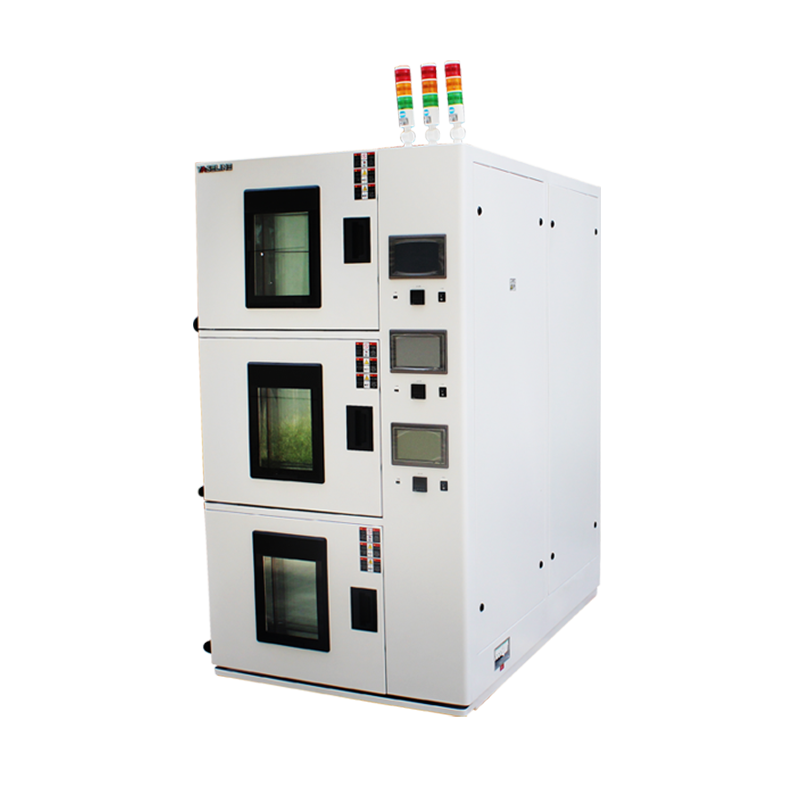
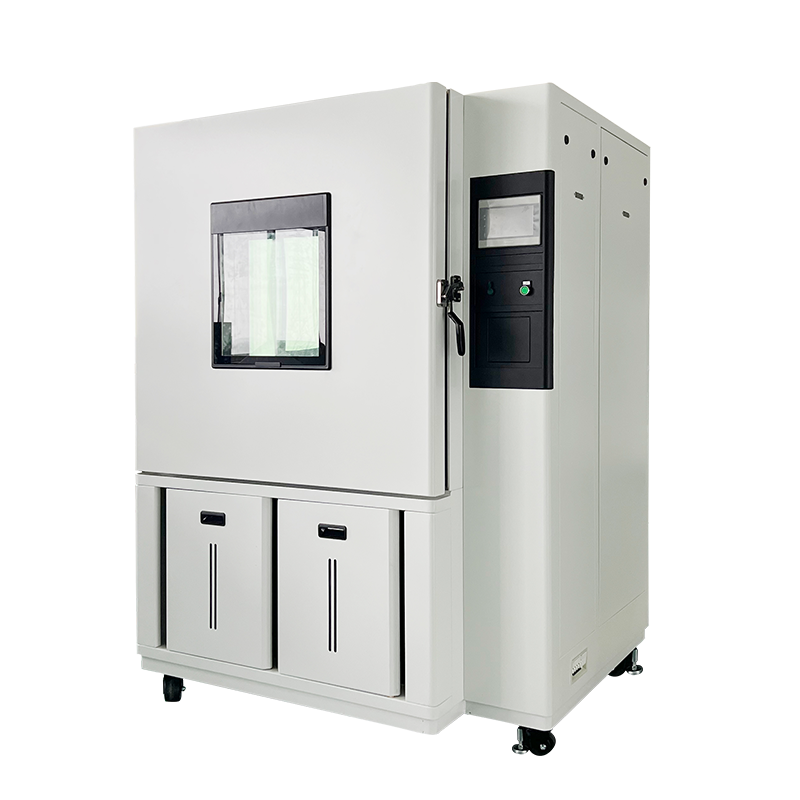
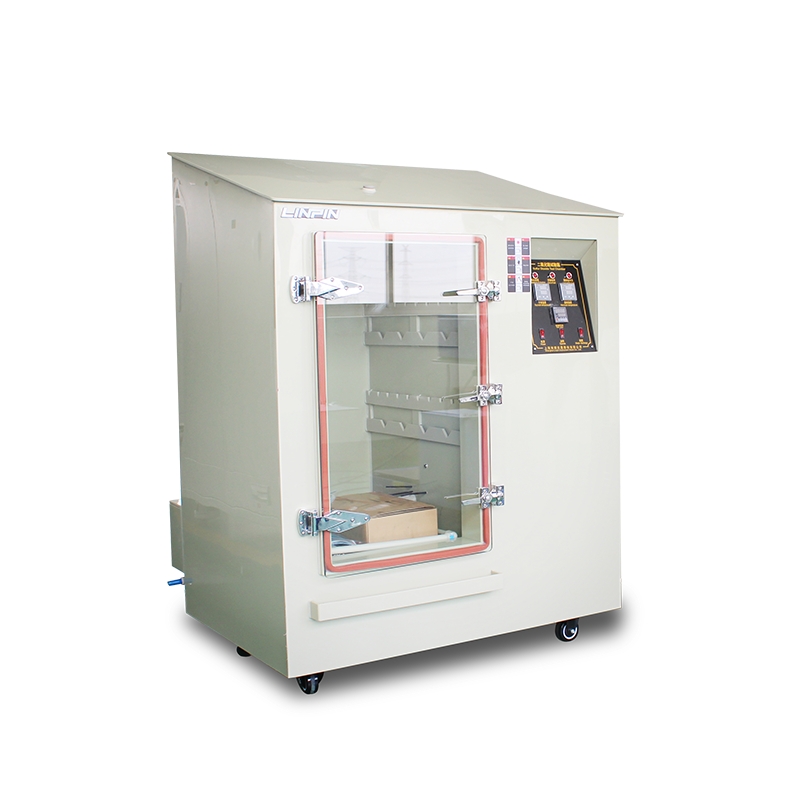
Thermal-Shock Chambers (TSCs) impose severe temperature ramps (−70 °C ↔ +200 °C within ≤5 min). Superimposed mechanical and thermal stresses exponentially raise failure rates. Statistics show that 70 % of unplanned downtime originates from three preventable areas: poor cleanliness, loose or corroded parts, and lubrication starvation. Drawing on MIL-HDBK-338, GB/T 2424.5-2021 and five-year data from ten third-party laboratories, this paper splits daily maintenance into three measurable lines—Cleaning, Inspection & Leak-proofing—and provides quantifiable cycles, tools and pass/fail limits for immediate field implementation.
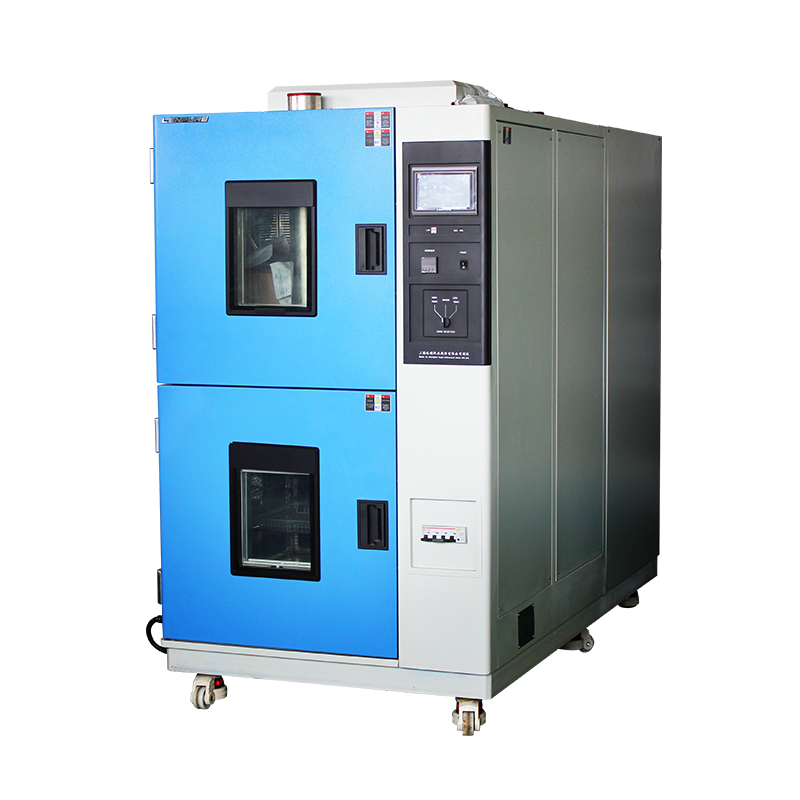
Cleaning Pillar: Keep “Invisible Killers” Outside the Cabinet
1.1 Working Volume (Hot/Cold Zone)
Cycle: immediately after every test
Tools: lint-free wipe, ≤99 % IPA, 0.3 µm HEPA vacuum
Steps:
a) Power off; confirm internal T ≤40 °C.
b) Wipe inner walls top-down with IPA-moistened wipe; never spray to avoid solvent ingress into insulation.
c) Treat silicone door seal: dry-wipe → thin silicone grease, ≤0.2 g m⁻¹; doubles seal life.
d) Remove specimen shelves; clean separately. If white spots appear on aluminum, polish lightly with 800# paper and apply high-temperature anti-rust film.
Pass standard: white-glove wipe shows no visible stain; particle count ≤1 000 ft⁻³ (0.5 µm).
1.2 Condenser / Evaporator
Cycle: monthly for air-cooled; quarterly for water-cooled
Tools: 0.6 MPa nitrogen gun, brass brush, IR thermometer
Key points:
a) Fin gap ≤1 mm reduces heat rejection by 18 %; straighten with fin comb.
b) Tube-to-ambient ΔT shall be ≤8 °C; >12 °C indicates severe fouling.
c) For shell-and-tube, back-flush at 1.5× rated flow; outlet turbidity <5 NTU.
1.3 External Panels & Base Plate
Cycle: weekly; immediately after wind-blown dust, rain or snow
Tools: industrial vacuum, neutral detergent
Notes:
a) Caster gaps accumulate dust; spray ≤1 mL WD-40 per point after vacuuming.
b) Drain trough φ6 mm must remain open; blocked trough lets defrost water flood the electrical bay.
Inspection Pillar: Eliminate “Failure Seeds” at Embryonic Stage
2.1 Mechanical Fasteners
Cycle: first working day each month
Tools: torque wrench (±3 %), tamper-proof marker
Method:
a) Diagonally tighten high-tensile bolts (≥8.8 grade) on compressor, blower and basket drive.
b) Typical M8 torque =25 N·m (follow OEM book).
c) Mark bolt head with line for quick visual check next cycle.
2.2 Corrosion & Seals
Cycle: quarterly
Acceptance:
a) If stainless liner shows rust, swab with 10 % oxalic acid; after passivation, conductivity <50 µS cm⁻¹.
b) Replace door seal when compression set >2 mm; otherwise frost thickness doubles and power rises 12 %.
2.3 Lubrication Management
Cycle: every 500 running hours or 6 months
Lubricant: PFPE Krytox GPL 227 (−70 °C ↔ +250 °C)
Points:
a) Basket rails: 0.3 g per 300 mm; wipe off excess after 10 cycles.
b) Fan bearings: 2 g per shot with grease gun; excess grease can raise bearing temperature >10 K.
2.4 Sensor Calibration
Cycle: 12 months
Accuracy: temperature ±0.5 °C; humidity ±3 %RH
Method:
a) Deploy nine-point AA PT100 reference (±0.1 °C) array; calculate uniformity.
b) If uniformity >2 °C, check blower speed and air-duct baffles for deformation.
Leak-proof Pillar: Put “Forgotten Corners” on a Checklist
3.1 Visual Work Card
Template: A4 laminated; front lists 38 checkpoints, back shows four sketches (basket, seal, valve, wireway); mark status with red/yellow/green stickers.
3.2 Key Items Easily Missed
a) Cable glands: PVC jackets embrittle at low temperature; loosening rate 15 %. Hand-tighten plus wrench re-torque.
b) Pneumatic solenoids: O-rings crack at −70 °C; replace FFKM low-temperature rings every 6 months.
c) Quick couplings: water-coolant type spring fatigue; replace entire batch every 2 years to prevent blow-off flooding.
3.3 Software Aid
Enter “chamber ID–maintenance date–next due–owner” quadruple in CMMS; system sends e-mail + WeCom alert 7 days ahead, cutting omission rate from 12 % to 1 %.
Common Mis-Cares & Corrections
Only wipe inner walls, ignore condenser → chronic high-pressure alarm, mis-diagnosed as refrigerant leak.
Spray water-based cleaner on seal → silicone absorbs water, embrittles at low T, life halved.
One-size-fits-all lube interval → high-frequency basket rails (>30 cycles/day) need grease every 250 h.
Neglect cooling-tower water → 5 °C rise in condensing T, 18 % more power, often blamed on “hot weather”.
Quantified Benefits
A defense lab (2019-2022) after implementing above rules:
Unexpected downtimes: 7.2 → 1.4 per year
Annual repair cost: USD 7.0k → 1.6k per chamber
Basket-drive motor life: 18 kh → 32 kh
Out-of-tolerance tests due to seal leakage: 6 % → 0.3 %
Conclusion
Maintaining a thermal-shock chamber is not a “spring cleaning” but a data-driven, cycle-based, responsibility-assigned engineering process. Split the job into measurable cleaning, inspection and leak-proof actions, add visual cards and CMMS, and the equipment will stay in its “stress-safe zone”, achieving both longer lifetime and trustworthy test data.








Copyright © 2025 Shanghai Linpin Instrument Co., Ltd Copyright
| ICP Number:Shanghai ICP Record No. 12029585-7
| Sitemap






 EN
EN
 中文
中文 Pусский
 Tiếng Việt
 ภาษาไทย
 پاکستانی زبان