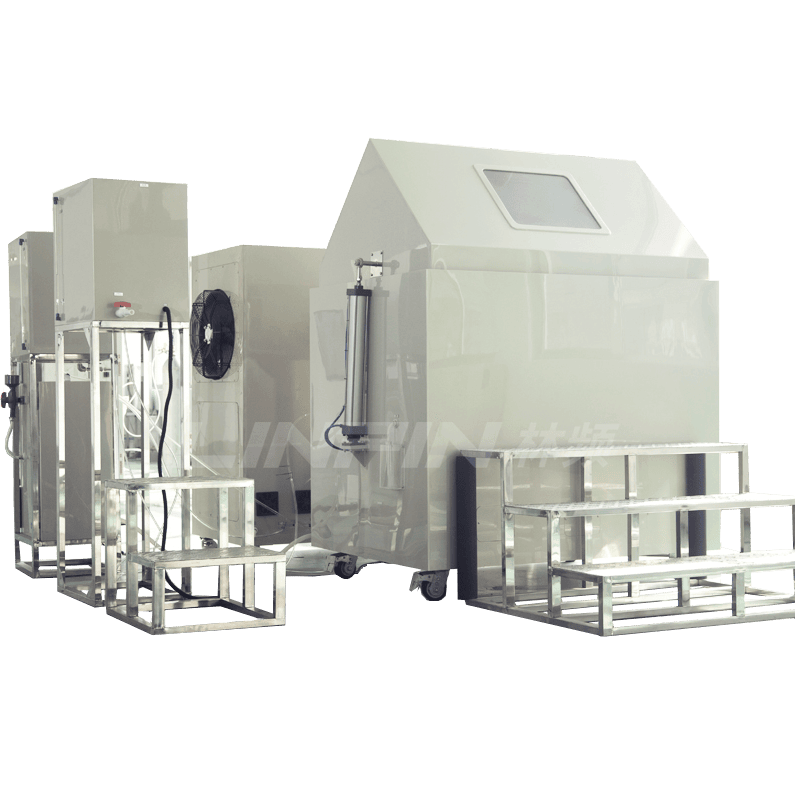
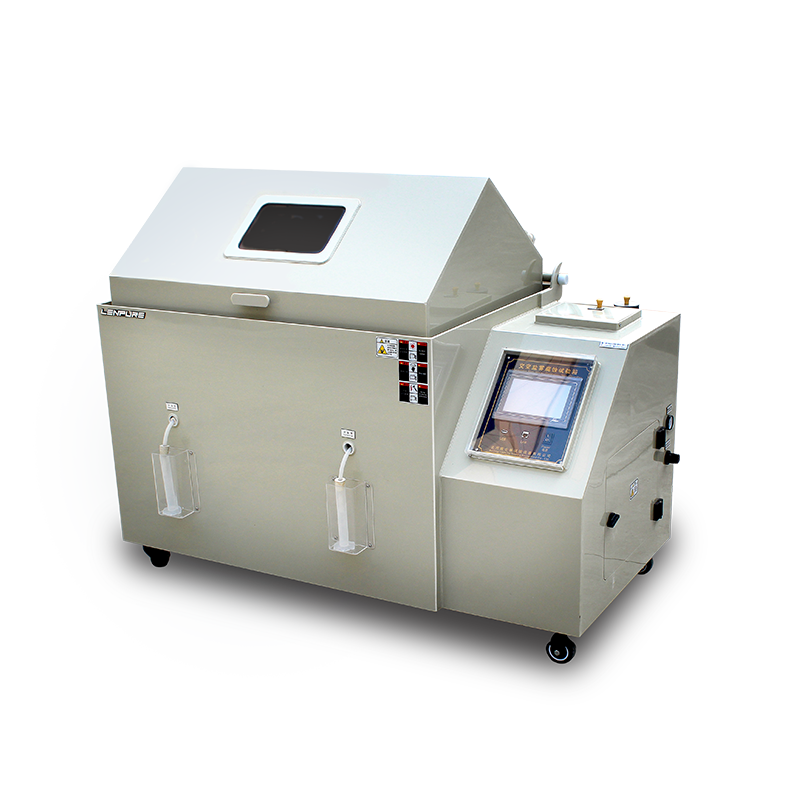
Salt spray test chambers serve as critical testing equipment for simulating marine and industrial atmospheric corrosion environments, playing an irreplaceable role in material weathering evaluation, coating performance verification, and product quality control. Similar to other precision instruments, standardized operation of this equipment directly affects test data accuracy, personnel safety, and full life-cycle operational reliability. Establishing a systematic operation management system constitutes an essential requirement for ensuring smooth corrosion testing implementation and extending equipment service life.
I. Sealing Water System and Liquid Level Monitoring Requirements
The salt spray test chamber employs a water-sealed structural design to ensure effective isolation between the test space and external environment. Before test initiation, the top water trough of the chamber must be filled with sufficient purified or distilled water to form a reliable liquid seal between the cover and main body, preventing salt spray leakage that could cause environmental contamination and data distortion. Simultaneously, the heating water trough supporting the heating system and the saturation air bucket of the air pretreatment unit must be promptly replenished with deionized water. The saturation air bucket functions to preheat and prehumidify compressed air, ensuring appropriate temperature and humidity conditions for air entering the sprayer. Insufficient liquid levels will cause heating elements to operate in a dry-burn condition, easily leading to irreversible hardware failures such as burnt heating tubes and damaged temperature sensors. Therefore, automatic liquid level monitoring devices must be installed, supplemented by a dual-confirmation mechanism through manual verification before startup.
II. Integrity Inspection of Air Supply and Pipeline Systems
Before testing, comprehensive status confirmation of gas-liquid transmission pipelines is mandatory. All connections—including sprayer water supply pipelines, salt solution delivery pipelines, compressed air supply pipelines, saturation air bucket connecting pipelines, and exhaust mist pipes—must be inspected for secure fastening to ensure no loosening or leakage exists. Particular attention should be paid to potential leakage points such as quick connectors and threaded interfaces to prevent salt solution drips from corroding chamber structures or electrical components. Air supply pressure must be stably maintained within the 0.2–0.4 MPa range and monitored in real-time through pressure regulating valves and gauges. Exhaust mist pipelines must remain unobstructed to avoid blockage by condensed salt crystals, which could cause abnormal pressure elevation inside the chamber. Additionally, salt solution storage containers should be equipped with filtration devices that require regular cleaning to prevent impurities from clogging nozzles and affecting atomization effectiveness and settlement rate uniformity.
III. Sample Placement Layout Specifications
The placement configuration of test samples within the workspace directly impacts salt spray settlement distribution uniformity. As a principle, samples must maintain a minimum 10 cm spacing from the inner chamber walls to ensure unimpeded salt spray airflow circulation. Appropriate intervals should be reserved between different samples to prevent mutual obstruction and spray shadowing. All test specimens must be secured using non-metallic fixtures or insulated brackets; direct contact with metal chamber components is strictly prohibited to avoid galvanic corrosion interference with test results. Sample placement angles should comply with relevant standard requirements, typically positioning flat specimens at 15–30 degrees from the vertical direction. Critically, the effective test area exposure ratio for each specimen must not be less than 98% of the total surface area to ensure complete corrosion medium coverage. Load-bearing capacity of the sample racks must be controlled within technical specifications (≤2 kg per item, ≤10 kg total) to prevent structural deformation.
IV. Test Continuity and Process Control Management
Salt spray corrosion tests should not be interrupted in principle, as test cycle integrity directly determines data comparability. If special circumstances require observing sample corrosion progression or replenishing salt solution, the “pause observation method” should be adopted: implement short-term interruption through the control system, strictly limit chamber door opening time to within 30 seconds, and record the interruption duration for subsequent data correction. Frequent or prolonged door opening will destabilize temperature and humidity field stability, causing salt spray concentration fluctuations that severely affect test reproducibility. External observation through transparent viewing windows with interior lighting systems is recommended to maximize test environmental continuity.
V. Safety Regulations for Corrosive Media Protection
Sodium chloride solutions or acetic acid salt spray solutions used in testing exhibit strong corrosiveness, with pH values typically ranging from 3.0 to 7.0, causing damage to human skin, mucous membranes, and metallic objects. Before opening the chamber, operators must wear personal protective equipment including protective gloves, goggles, and laboratory coats, with particular attention to protecting exposed areas such as hands and face. In case of accidental contact with salt solution, immediate irrigation with copious amounts of clean water for at least 15 minutes is required, with medical treatment sought if necessary. After testing, the inner chamber walls, sample racks, and collection devices must be promptly cleaned to prevent salt crystal adhesion that accelerates equipment corrosion. Exhaust mist pipe outlets should be connected to waste liquid collection systems to avoid direct discharge of corrosive gases into the laboratory environment.
VI. Sample Compatibility Matching Principles
To ensure test cycle consistency and data validity, specimens of identical materials or similar corrosion sensitivity should be prioritized for the same test batch. If mixing different materials is unavoidable, their predetermined test cycles must be completely identical. Since corrosion mechanisms and rates vary significantly among materials—for example, aluminum alloys and carbon steel exhibit entirely different corrosion development processes under identical salt spray conditions—mixed placement may cause some specimens to reach corrosion endpoints requiring premature removal while others remain unreacted due to insufficient cycles, resulting in test resource waste. Furthermore, corrosion products released from different specimens may interact, altering local salt spray pH values and causing cross-contamination. Therefore, scientific sample grouping management constitutes a critical prerequisite for obtaining reliable data.
VII. Equipment Maintenance and Institutionalized Management
Beyond standardized operation, a regular maintenance system must be established. Weekly inspections of water quality in saturation air buckets and heating water troughs, monthly cleaning of nozzles and salt water filters, and quarterly calibration of temperature and settlement rates are recommended. During prolonged shutdown periods, all water troughs should be drained, and pipelines purged with clean compressed air to prevent microbial growth and pipe corrosion. All operators must undergo specialized training and pass qualification assessments, demonstrating familiarity with equipment principles and emergency response procedures. Unauthorized personnel are strictly prohibited from adjusting electrical parameters or disassembling core components.
VIII. Technical Documentation and Standardized Operations
Before equipment commissioning, operators must systematically study product manuals, technical specifications, and relevant national standards (such as GB/T 10125, ISO 9227, etc.) to ensure comprehension and mastery of every technical detail and operational requirement. Developing Standard Operating Procedures (SOP) is recommended, transforming these requirements into visual flowcharts and checklists to achieve standardized, traceable operational processes. Only by instilling institutionalized, standardized, and refined concepts throughout the equipment’s full life cycle management can the technical effectiveness of salt spray chambers be fully realized, providing accurate, reliable, and reproducible test data for material corrosion resistance evaluation.
In Conclusion
The standardized use of salt spray test chambers represents a systematic engineering initiative involving multiple specialized fields including mechanical structure, electrical control, corrosion science, and safety protection. All user organizations should establish comprehensive training systems and supervision mechanisms, continuously enhancing operators’ professional competence to ensure equipment operates under safe, efficient, and precise conditions, thereby providing solid technical support for product quality improvement.


25.09







Copyright © 2025 Shanghai Linpin Instrument Co., Ltd Copyright
| ICP Number:Shanghai ICP Record No. 12029585-7
| Sitemap







 EN
EN
 中文
中文 Pусский
 Tiếng Việt
 ภาษาไทย
 پاکستانی زبان