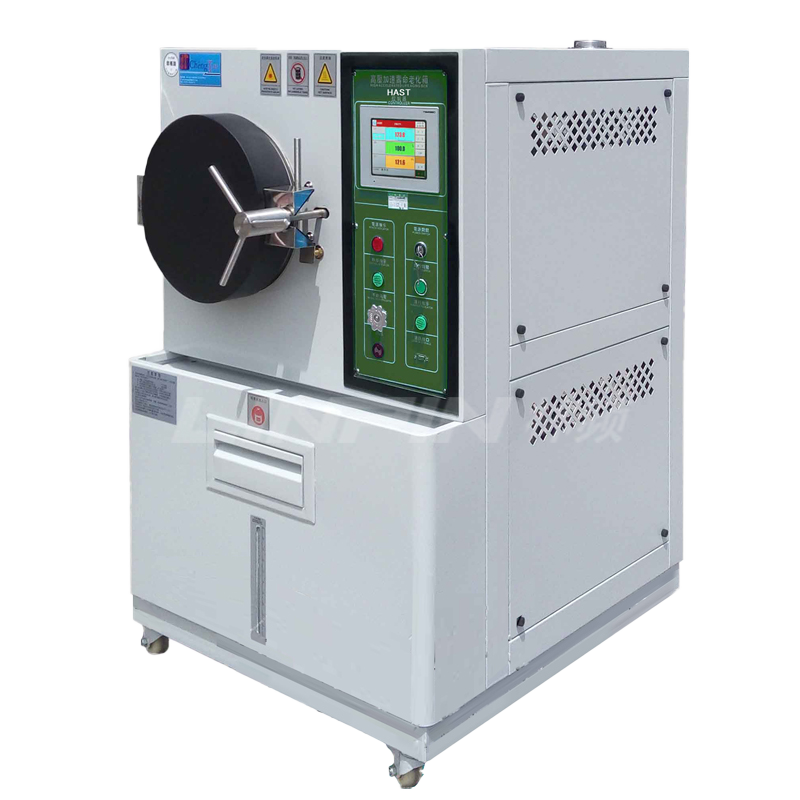
The performance indicators of a high and low temperature test chamber are crucial because they directly affect the reliability of test results, the breadth of application scenarios, and the effectiveness of quality assurance for products. This analysis will delve into four dimensions: the core functions of the test chamber, the significance of key performance indicators, the correlation between indicators and test results, and real-world application cases, supported by relevant data.

I. The Core Functions of a High and Low Temperature Test Chamber Determine the Importance of Indicators
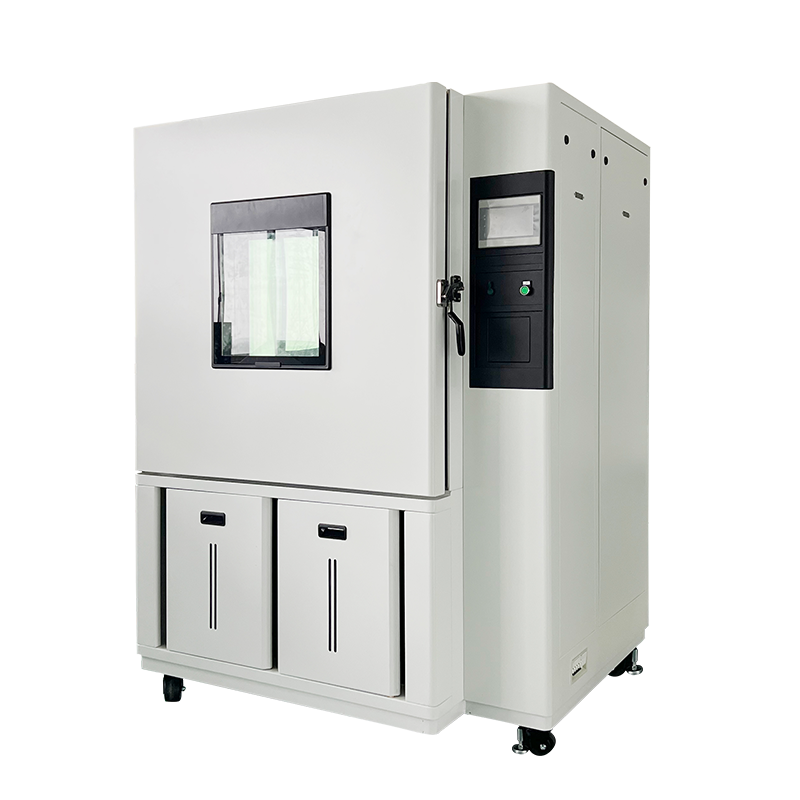
A high and low temperature test chamber simulates extreme temperature environments (typically ranging from -70°C to +150°C, with some models reaching -196°C or 500°C) to evaluate the reliability, durability, and safety of materials, components, and products under harsh conditions. Its applications span six major fields:
Electronics and Electrical Appliances: Testing the safety of batteries and the temperature adaptability of electronic components (e.g., the performance stability of mobile phones in extremely cold environments).
Automotive Industry: Verifying the reliability of automotive parts (such as engine components) during cold starts or high-temperature operation.
Aerospace: Ensuring the functional integrity of spacecraft components in the extreme temperatures of space.
Biomedical: Assessing the storage stability of vaccines or the risk of material deformation in medical devices.
New Energy: Evaluating the efficiency degradation of photovoltaic modules in low-temperature environments.
Materials Science: Analyzing the temperature dependence of material properties such as thermal expansion coefficients and tensile strength.
If the equipment’s indicators (such as temperature range and uniformity) do not meet standards, it cannot accurately simulate real-world application scenarios, leading to inaccurate test results.
II. Definition and Technical Requirements of Key Performance Indicators
The indicator system of a high and low temperature test chamber can be divided into basic parameters and precision parameters, both of which directly impact the effectiveness of testing:
Basic Parameters: The boundaries of testing capabilities
Temperature Range:
Standard devices should cover -70°C to +150°C, while ultra-low-temperature models (e.g., -196°C) are used for testing aerospace materials.
Insufficient range will fail to meet specific industry needs (e.g., lithium battery testing at -40°C).
Ramp Rate (Temperature Change Rate):
Ordinary devices have a rate of about 1°C/min, while rapid-temperature-change models can reach 15°C/min (e.g., for simulating automotive cold starts).
A slow rate will prolong the test cycle and reduce efficiency.
Precision Parameters: The core of test result credibility
Uniformity:
Insufficient uniformity → Uneven heating of samples → Failure of material expansion coefficient tests.
Temperature Fluctuation:
Excessive fluctuation → Poor environmental stability → Deviation in accelerated aging test life predictions.
III. How Indicators Affect the Accuracy of Test Results
Case 1: The Impact of Temperature Uniformity on Automotive Electronics Testing
Requirement: Automotive ECU modules must function normally between -40°C and +85°C.
Problem: If uniformity exceeds ±3°C, the module’s local temperature may exceed the threshold, triggering a false protection mechanism.
Solution: Select a device with uniformity ≤±1°C (e.g., ACTBOX brand) to avoid misjudgment.
Case 2: The Significance of Humidity Control Precision in Pharmaceutical Testing
Requirement: Verify the storage stability of vaccines at 25°C/60% RH.
Problem: If humidity deviation exceeds 5% RH, the protein denaturation rate will not match reality.
Standard Requirement: Humidity precision must reach ±3% RH; otherwise, it violates GMP regulations.
Case 3: The Efficiency of Temperature Change Rate in Battery Safety Testing
Requirement: Conduct charge-discharge cycle tests on lithium batteries at -20°C.
Inefficient Device: Temperature change rate of 1°C/min → Single test takes 8 hours.
Efficient Device: Rate of 5°C/min (e.g., rapid-temperature-change model) → Time reduced to 2 hours.
IV. Differences in Brand Indicators and Industry Selection Trends
Comparison of Mainstream Brand Performance (Based on):
Industry-Specific Recommendations:
Consumer Electronics: Choose models with uniformity ≤±2°C and humidity control (20%~98% RH).
Aerospace: Require devices with a wide range of -70°C to +150°C and a fluctuation ≤±0.3°C.
Future Trends:
Intelligent control (AI temperature control algorithms).
Environmentally friendly refrigerants (e.g., R404A).
Modular design.
V. Conclusion: Indicators Reflect the True Value of a Device
The indicators of a high and low temperature test chamber are not just a list of technical parameters; they are a comprehensive reflection of the scientific nature of testing, efficiency, and cost-effectiveness:
Reliability: High-quality indicators ensure that the test environment complies with international standards (e.g., GB/T 2423).
Economic Efficiency: High uniformity reduces the need for repeated tests, and precision control minimizes the risk of product recalls.
Forward-Looking: Support for the development of new materials (e.g., solid-state batteries) and extreme environments (e.g., deep-space exploration).
In essence, “good indicators are truly good” because only through precise, stable, and efficient performance parameters can we provide a genuine and effective guarantee for product quality, ultimately driving technological upgrades and safety standard improvements in the industry.









Copyright © 2025 Shanghai Linpin Instrument Co., Ltd Copyright
| ICP Number:Shanghai ICP Record No. 12029585-7
| Sitemap






 EN
EN
 中文
中文 Pусский
 Tiếng Việt
 ภาษาไทย
 پاکستانی زبان