As crucial environmental simulation testing equipment, high and low temperature alternating test chambers come in various structural types. There is no absolutely perfect device; each structure has its unique advantages and limitations.
Single-chamber Test Chamber
The structural characteristics of the single-chamber high and low temperature alternating test chamber can be roughly inferred from its name. The high and low temperature conversion process in this chamber is entirely carried out within one single box. This structure brings significant advantages. Since the test specimen always remains in the same equipment environment, the influence of external environmental factors on the specimen’s temperature is greatly reduced. The sample does not need to be transferred between different devices, which significantly minimizes the interference and risks that may arise from transfer.
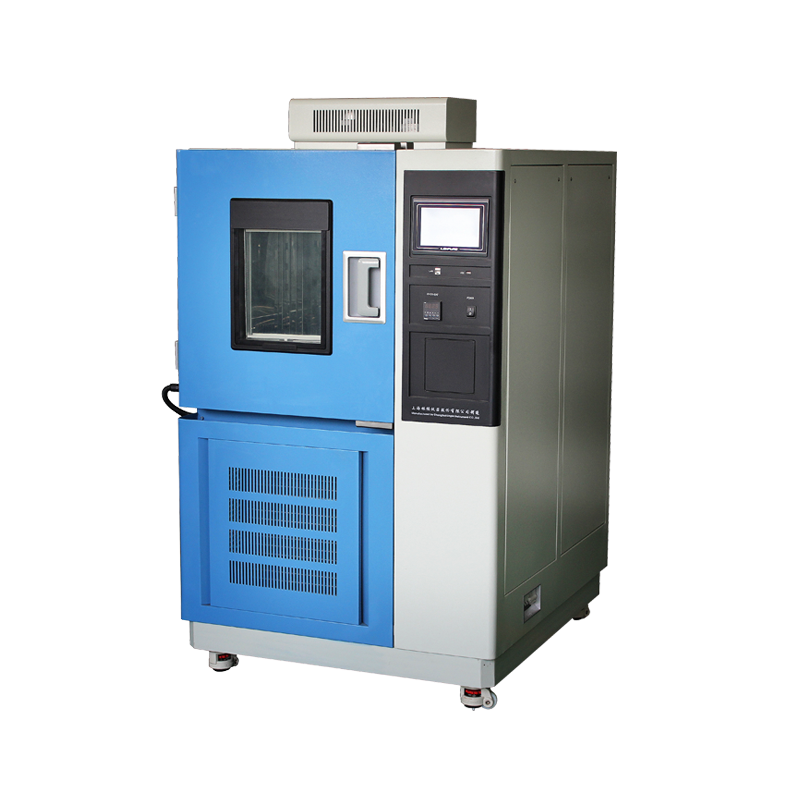
However, its disadvantages are also quite prominent. During the temperature conversion process, the device not only has to heat or cool the test item but also needs to handle the maintenance structure simultaneously. This leads to a substantial increase in the required heating and cooling capacities. Although the temperature conversion speed is relatively fast, the difficulty of temperature control also rises accordingly, placing extremely high demands on the device’s temperature control system.
Horizontal Two-chamber Test Chamber
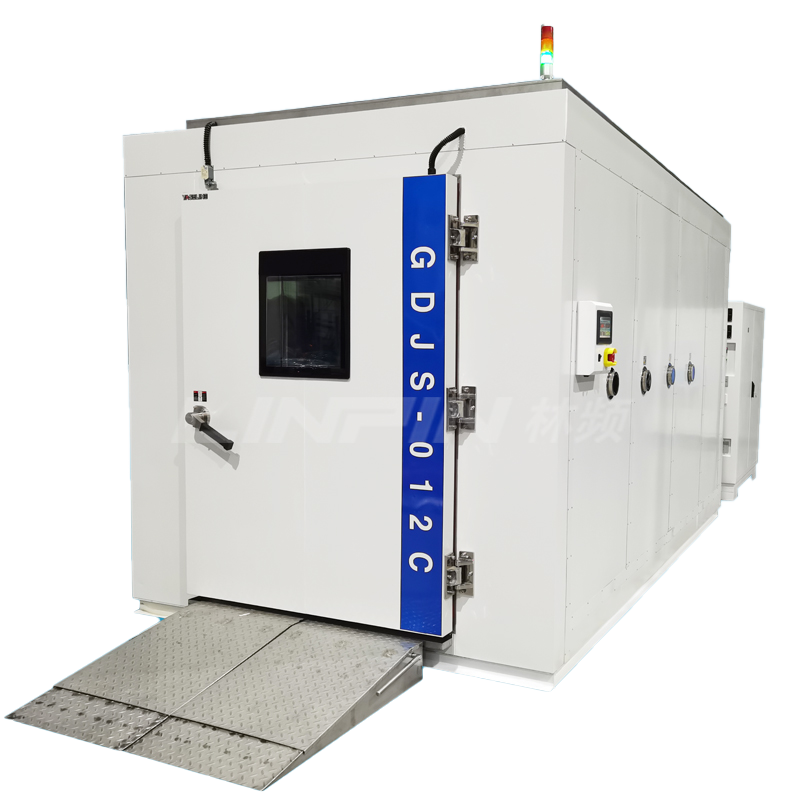
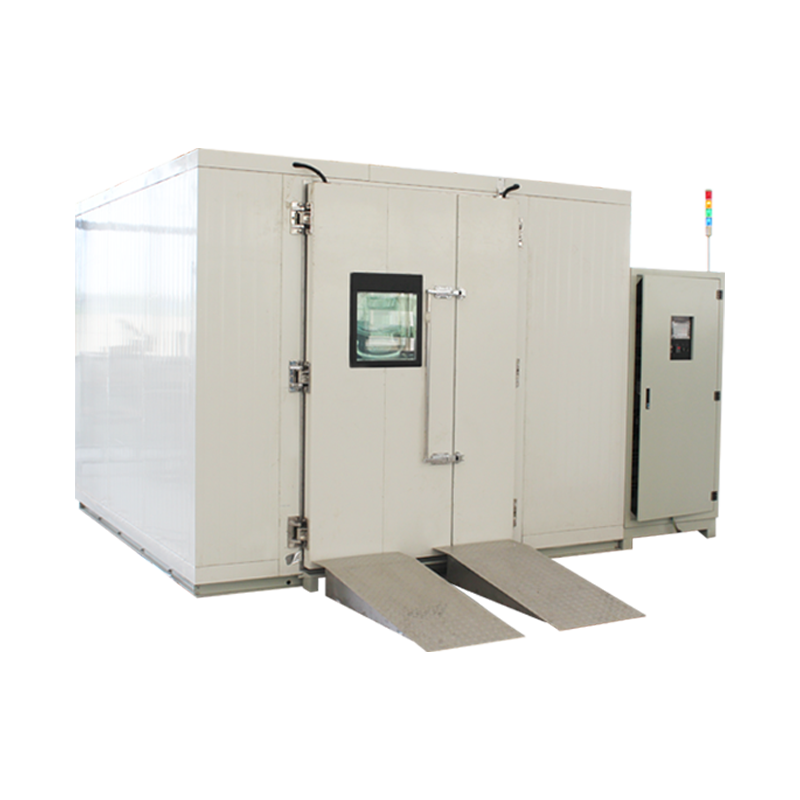
The horizontal two-chamber test chamber adopts a unique design concept. The test object is transferred between the low-temperature chamber and the high-temperature chamber to achieve the testing purpose. This structure excels in temperature control. Because the required heating and cooling capacities are relatively small, temperature control becomes easier and more precise.
Nevertheless, it also has obvious shortcomings. Although the test specimen is moved using a transfer device, during the transfer between two chambers of the same size, the specimen is still inevitably affected by the external environment. For example, changes in environmental factors such as temperature and humidity during the transfer process may cause certain interference to the specimen, thereby affecting the accuracy of the test results.
Left-right Moving Test Chamber
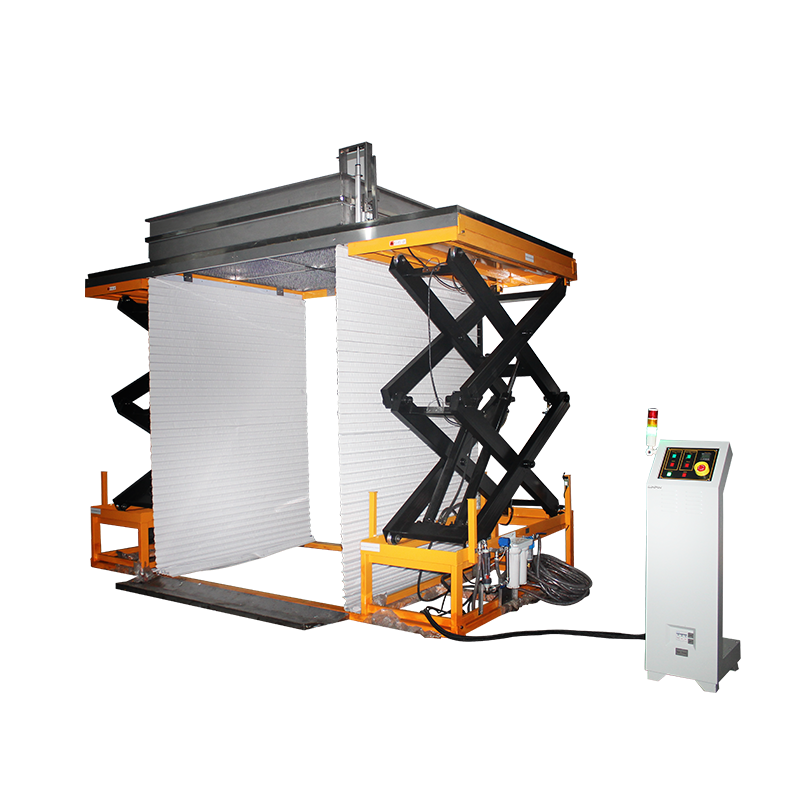
The left-right moving test chamber is essentially a left-right two-chamber testing device. It uses a moving frame to transfer the test specimen between the high and low temperature chambers. The advantages of this device are quite apparent. It requires relatively small amounts of cooling and heating capacities, the conversion speed of the test specimen is fast, and temperature control is relatively easy.
However, the downside is that during the transfer process of the test specimen, as the specimen needs to be exposed to the space between the chambers, it is easily affected by the external environment. For instance, temperature fluctuations and airflow changes in the surrounding air may interfere with the temperature stability of the specimen,进而 (which can be translated as “thus” or “and consequently” in this context, but to maintain a more natural English flow, it’s omitted here as the meaning is implied) affecting the test results.
Vertical Up-down Moving Test Chamber
The vertical up-down moving test chamber adopts a structural design with an upper and a lower chamber. The test specimen is transferred between the high and low temperature chambers using a lifting frame. Essentially, its advantages and disadvantages are quite similar to those of the left-right moving device. The advantages lie in the relatively small demand for cooling and heating capacities, the convenience of specimen conversion, and the relative ease of temperature control.
The disadvantage is also that during the specimen transfer process, it is easily affected by the external environment. During the lifting process, the environment in which the specimen is located may change. For example, temperature gradients and humidity differences may have adverse effects on the specimen, leading to deviations in the test results.
When customers are making a selection, they should fully consider the testing requirements of their own samples and combine them with the advantages and disadvantages of various devices to make the most suitable choice, ensuring the accuracy and reliability of the tests.

25.04







Copyright © 2025 Shanghai Linpin Instrument Co., Ltd Copyright
| ICP Number:Shanghai ICP Record No. 12029585-7
| Sitemap






 EN
EN
 中文
中文 Pусский
 Tiếng Việt
 ภาษาไทย
 پاکستانی زبان