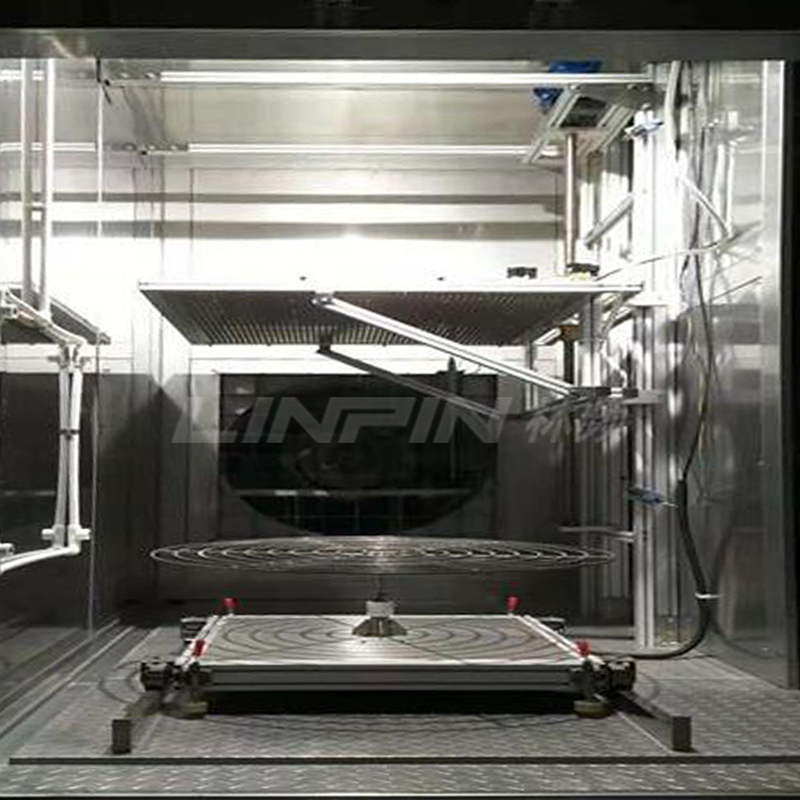
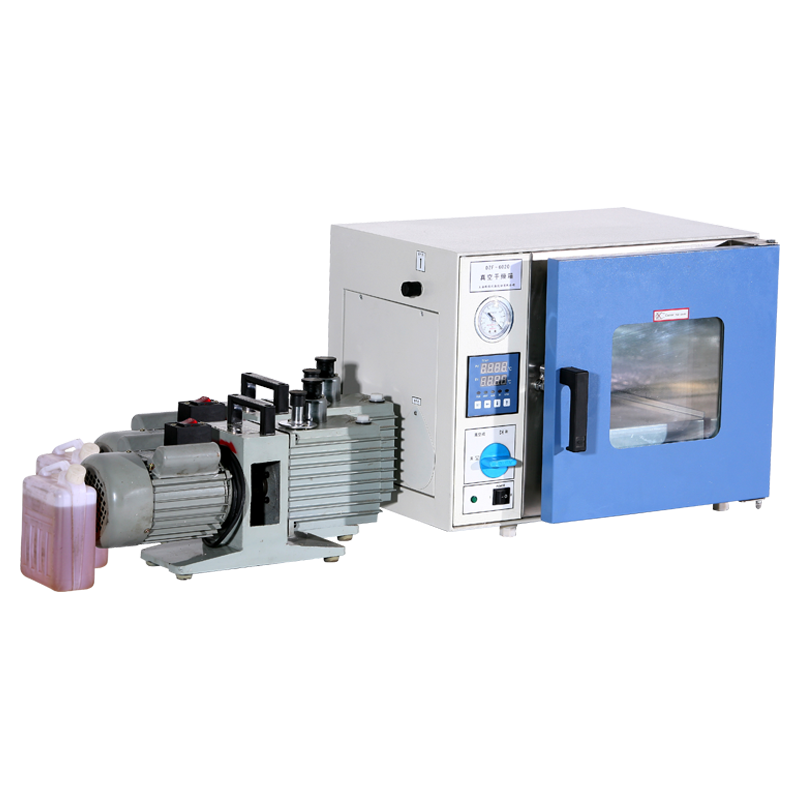
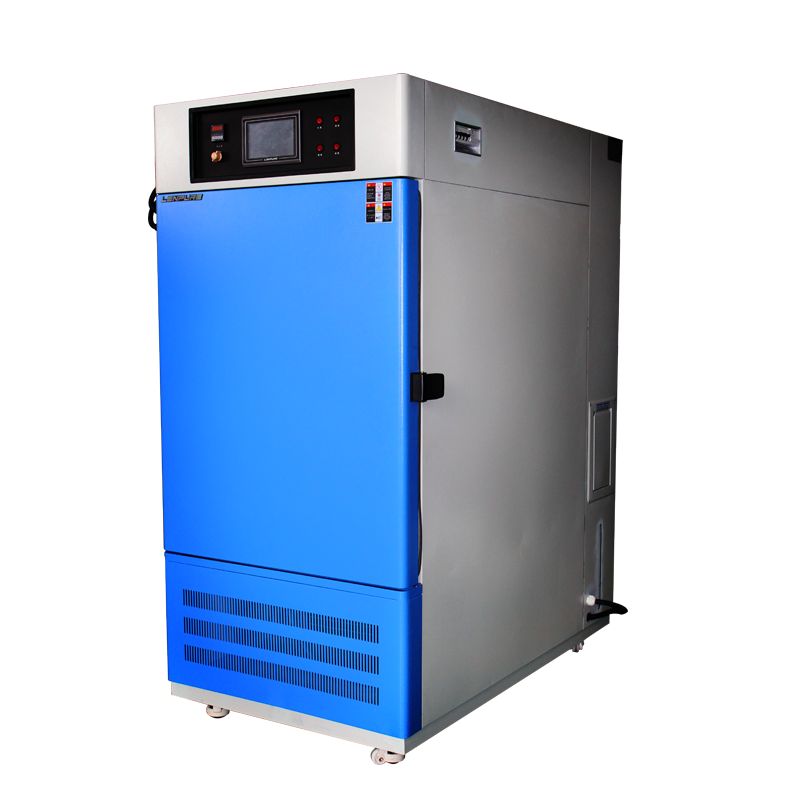
In the whole lifecycle management of industrial equipment, the run-in period is a crucial yet often overlooked stage. As a precision environmental simulation device, the high-low temperature humidity test chamber also undergoes a systematic adaptation process during its initial operation phase. This period is not only a critical moment for the coordination between mechanical components and electronic elements but also an important window for operators to master equipment characteristics and accumulate operation and maintenance experience. Scientific understanding and standardized management of the equipment run-in period is of profound significance for ensuring test data accuracy and extending equipment service life.
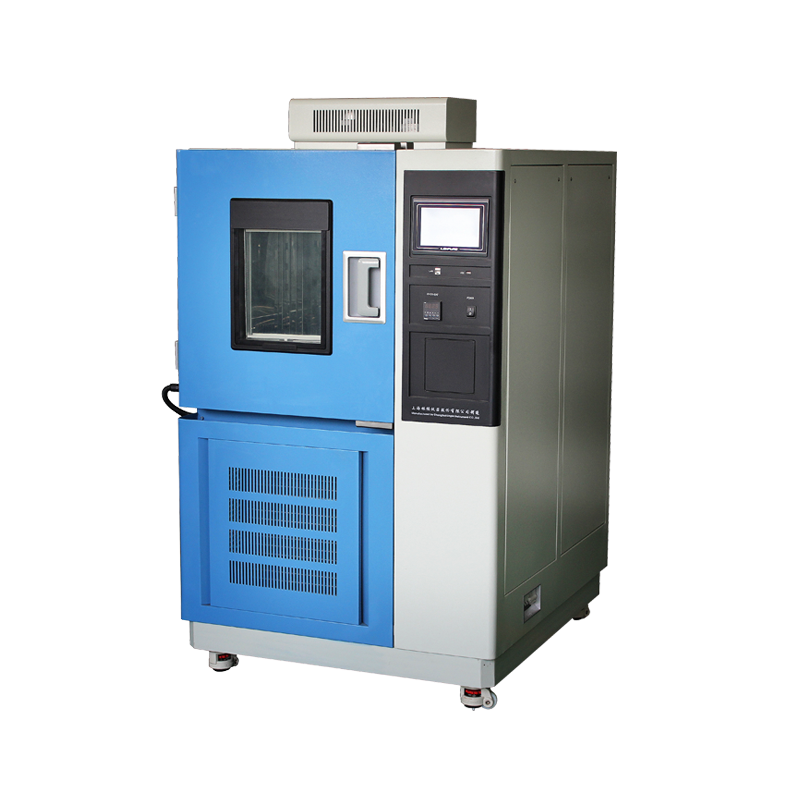
I. Initial Adaptation Mechanism of Equipment Components
For newly commissioned high-low temperature humidity test chambers, all core functional units—including the refrigeration system, heating device, humidification mechanism, circulation fan, and temperature-humidity sensing system—employ brand-new components. These precision parts inevitably undergo a physical adaptation process during initial operation.
Regarding mechanical coordination, moving pairs such as pistons and cylinder walls within the compressor, fan bearings and journals, and valve sealing surfaces bear microscopic processing traces and geometric deviations during initial operation. Under load, contact surfaces expand their actual contact area through trace material running-in, accompanied by dynamic changes in friction coefficients and localized temperature rise. If heavy loads or extreme conditions are applied during this period, abnormal wear will occur, creating early failure risks. Therefore, during the initial commissioning phase, manufacturers’ specified load gradients should be strictly followed, controlling parameters such as temperature change rate and humidity alternation frequency within 70%-80% of rated values, allowing sufficient self-adaptation time for moving parts.
Electronic systems also undergo a stability establishment process. Brand-new electronic components such as PLC controllers, solid-state relays, and inverters require initial adjustment of electrical stress within their semiconductor devices upon powering up, with minor drift in circuit parameters. Particularly for temperature and humidity sensors, their humidity-sensitive and temperature-sensitive elements must complete initial calibration of characteristic curves within specific environmental cycles. Maintenance personnel should increase calibration frequency during the run-in period and establish an initial operation data archive to provide a basis for subsequent baseline comparisons.
II. Building Proficiency in Human-Machine Collaboration
Another dimension of equipment adaptation is reflected in the skill adaptation between operators and the test system. Although equipment manufacturers typically provide systematic operational training before delivery, covering equipment principles, operational procedures, and basic fault diagnosis, there are objective differences between theoretical knowledge and practical capability.
During the initial operational phase, operators have not yet developed muscle memory and conditioned reflexes for control interface layouts, parameter setting logic, and alarm information interpretation. The preparation time for test tasks, program setting accuracy, and abnormal situation response speed are all at relatively low levels. This efficiency difference represents a normal capability-building curve and should not be considered individual incompetence. Research indicates that through the accumulation of 30-50 standard work cycles, operators’ task completion efficiency can improve by 40%-60%, while the misoperation rate decreases by over 90%.
More importantly, the run-in period provides valuable opportunities for acquiring tacit knowledge. By observing subtle performance indicators such as operating sounds, vibration characteristics, and response delays under different setting conditions, operators gradually develop an intuitive ability to judge the equipment’s “health status.” This experience-based fault prediction capability holds irreplaceable value in subsequent long-term operation and maintenance. For instance, slight abnormal noises during compressor startup or periodic changes in humidification water pan water level, which appear normal superficially, may signal potential systemic issues to experienced operators.
III. Standardized Control Strategies for the Run-in Period
To ensure the smooth passage of high-low temperature humidity test chambers through the initial operation phase, a rigorous control system must be established:
1. Graduated Load Management: Develop a four-week progressive loading plan: execute no-load temperature-humidity cycles in the first week to verify basic system functions; introduce low heat-value test specimens in the second week with loading not exceeding 1/3 of the chamber volume; increase to 2/3 load in the third week to simulate normal test conditions; only allow full-load operation in the fourth week. Each stage must record critical parameter curves to assess system stability.
2. Refined Patrol Inspection System: During the run-in period, daily inspection frequency should be doubled compared to standard cycles, focusing on monitoring critical indicators such as compressor suction/discharge pressure, fan current fluctuations, humidification water conductivity, sealing strip adhesion, and condensate drain smoothness. Establish data trend analysis charts to identify gradual anomalies. Any deviation beyond specifications should immediately trigger preventive maintenance to eliminate operation with hidden defects.
3. Dynamic Training Assessment: Synchronize the equipment run-in period with personnel training and evaluation periods. Require operators to submit daily operation logs detailing operational steps, abnormal phenomena, treatment measures, and effectiveness. Technical supervisors should regularly organize case analysis meetings to transform individual experiences into an organizational knowledge base. Concurrently, operators should be encouraged to maintain close communication with manufacturer technical support to clarify ambiguous understandings promptly.
4. Advanced Preventive Maintenance: Despite being new equipment, the first comprehensive maintenance should be implemented early during the run-in period. It is recommended to execute the first in-depth maintenance after 100 operating hours or completion of 20 complete test cycles: replace compressor lubricating oil, clean refrigeration system dryers/filters, calibrate all sensors, tighten electrical connections, and verify insulation layer integrity. This measure can promptly remove metal particles and impurities generated during run-in, preventing secondary wear.
IV. Scientific Understanding and Mindset Adjustment
The equipment run-in period is essentially a necessary transition from an assembly state to a stable operating state, representing both physical adaptation and knowledge construction. Operation and maintenance teams should adopt a scientific attitude toward performance fluctuations and efficiency limitations during this phase, avoiding excessive anxiety or blind optimism.
Manufacturers’ operation manuals and training materials are idealized guidance based on standard conditions, whereas actual test demands are often complex and variable. Therefore, allowing a certain range of exploratory operations to test equipment boundary performance under controlled conditions is instead an effective way to deepen understanding. The key lies in ensuring all non-standard operations undergo risk assessment and have emergency plans formulated.
From a whole lifecycle cost perspective analysis, standardized run-in period management can extend equipment trouble-free operation time by over 30% and reduce annual maintenance costs by approximately 25%. The return on this early investment is long-term and significant. Consequently, enterprise management should provide sufficient time allowances and resource support at the institutional level for the run-in period, avoiding immediate deployment of new equipment into high-intensity production sequences and eliminating short-sighted behaviors.
Conclusion
The run-in period of high-low temperature humidity test chambers is a critical period for equipment performance potential release and operation and maintenance capability development. Through systematic measures including graduated load management, strengthened patrol inspection, deepened training, and advanced maintenance, the precision coordination of mechanical components and personnel skill maturity can be effectively promoted. Only by adopting rigorous professional attitudes and scientific management methods to navigate this phase can a solid foundation be laid for long-term stable equipment operation, ultimately achieving comprehensive optimization of test data accuracy, equipment reliability, and operational economy.








Copyright © 2025 Shanghai Linpin Instrument Co., Ltd Copyright
| ICP Number:Shanghai ICP Record No. 12029585-7
| Sitemap






 EN
EN
 中文
中文 Pусский
 Tiếng Việt
 ภาษาไทย
 پاکستانی زبان


组件紫外试验箱.png)