Proper operation of the salt spray test chamber’s temperature control system is crucial, as it ensures the accuracy of test results; therefore, incorrect operations should be strictly avoided. So, what is the correct procedure for operating the chamber’s temperature controller?
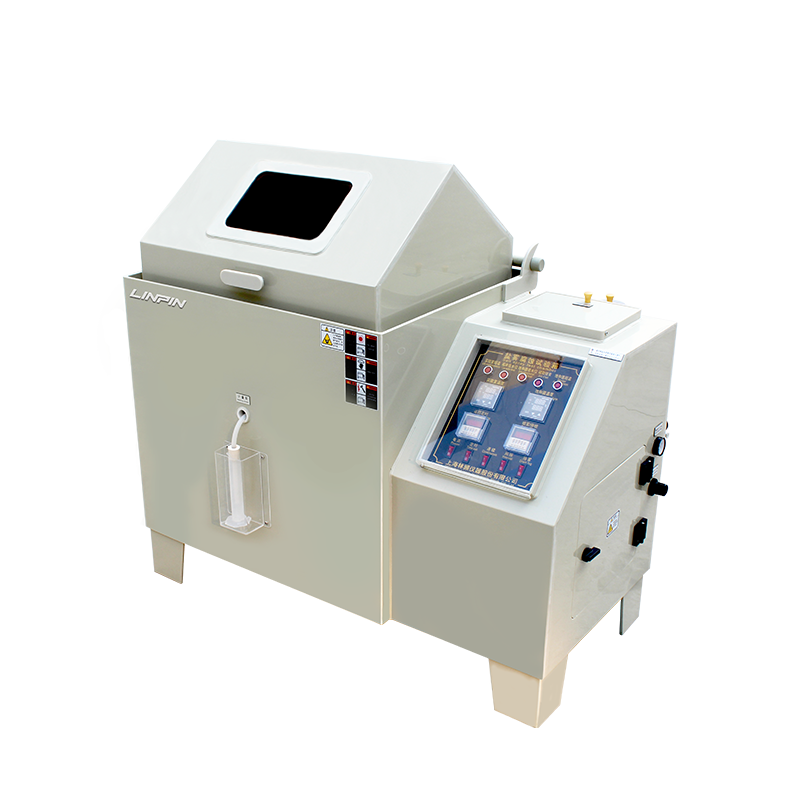
Here are the key points regarding the operation instructions for the salt spray test chamber’s temperature controller:
First, adjust the temperature value by pressing the up/down triangle keys to set it to the required test temperature. Generally, the controller will automatically confirm the set value. For neutral salt spray (NSS) testing, the chamber temperature should be set to 35°C and the saturator (bucket) temperature to 47°C. For acidic salt spray (AASS) testing, the chamber temperature should be set to 50°C and the saturator temperature to 63°C.
Second, if a discrepancy exists between the measured temperature and the displayed temperature, press the O key (the controller will display “AT OFF”). Then press the C key to switch modes (the controller will display “CN5”). Use the up/down triangle keys to adjust the offset value to compensate for the temperature difference detected.
Third, if the displayed temperature fluctuates or becomes unstable, press the O key (the controller will display “AT OFF”). Then press the up triangle key to change the setting from “OFF” to “ON”, activating the automatic tuning mode. Important: Do not turn off the power during this process. The temperature will stabilize within approximately ten minutes.
You can use these methods to adjust the temperature controller of the salt spray test chamber. The temperature controller primarily operates based on temperature changes in the equipment’s working environment, causing physical deformation within its internal components to produce specific effects. This creates a series of automatic control elements—opening or closing actions—commonly known as the temperature control switch or thermal protector.
The configuration of this component is significant for temperature regulation of the test equipment, because during testing, it is sometimes necessary to heat the salt solution to accelerate corrosion of the test specimens. At such times, we must use the temperature controller to regulate the pressure saturator temperature and chamber temperature, enabling the equipment to achieve accelerated corrosion and thereby improving testing efficiency.










Copyright © 2025 Shanghai Linpin Instrument Co., Ltd Copyright
| ICP Number:Shanghai ICP Record No. 12029585-7
| Sitemap






 EN
EN
 中文
中文 Pусский
 Tiếng Việt
 ภาษาไทย
 پاکستانی زبان