In the process of enterprise production and quality inspection, the salt spray test chamber plays a crucial role. Some enterprises use the salt spray test chamber with a high frequency. Under long-term and high-load operation, it is inevitable that the equipment will encounter faults. If there is a lack of necessary routine maintenance, the frequency of faults will further increase.
Contacting the manufacturer or professional technicians for repairs every time the equipment breaks down not only involves a cumbersome process but also consumes a significant amount of time and economic costs. In fact, most faults of the salt spray test chamber are common minor issues. Operators can quickly resolve them and restore the equipment to normal operation by mastering the corresponding repair skills. Next, we will introduce in detail the troubleshooting methods for common faults of the salt spray test chamber to help you easily overcome the daily usage hassles.
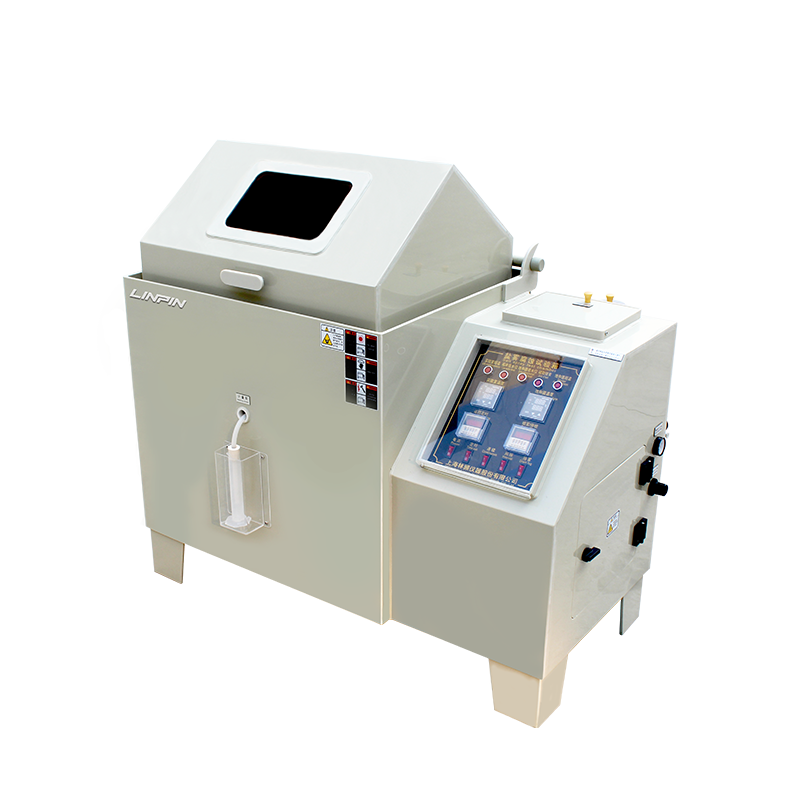
The Equipment Fails to Work After Power-On
When all preparations are in place and the power is turned on, but the equipment shows no response, the first thing to check is the water level in the heating water tank. If the water level in the heating water tank is too low, the equipment will automatically enter the self-protection mode, resulting in the inability to start normally. In this case, simply adding an appropriate amount of water to the heating water tank may allow the equipment to resume normal operation.
The Equipment Fails to Spray
If the salt spray test chamber does not spray, you can conduct inspections from the following aspects:
Check the Air Compressor: Confirm whether the air compressor is operating normally and simultaneously check if the air delivery pipe of the compressor has any damage or air leakage. If the air delivery pipe is damaged, it should be promptly replaced with a new one.
Check the Pressure Regulator: Examine whether the pressure of the pressure regulator is within the normal range. If the pressure is abnormal, adjust the pressure regulator to restore it to the appropriate pressure value.
Clean the Nozzle: The nozzle is a key component for spraying in the salt spray test chamber. After long-term use, the nozzle may be blocked by foreign objects. At this time, carefully check if the nozzle is blocked and replace it with a new one if necessary.
Check the Solenoid Valve: Observe the working condition of the solenoid valve. If the air outlet is obstructed, it may be due to impurities blocking the interior of the solenoid valve, which requires cleaning and dredging. If the coil of the solenoid valve is burned out and cannot work normally, it must be replaced with a new one.
Normal Spraying but the Air Compressor Does Not Operate
When there is normal spraying but the air compressor does not operate, it is likely that due to improper operation by the staff, the air compressor has triggered the emergency stop function and entered the protection state. In this situation, no repair is needed. The staff only need to review and correct their operating procedures, and the air compressor can resume normal operation.
The Touch Screen Has No Response
If the touch screen of the salt spray test chamber has no response, first try to adjust the settings of the touch screen and turn off the auto-lock function. If the touch screen still does not respond after turning off the auto-lock function, it is very likely that there is a hardware problem. In this case, it is necessary to contact the equipment manufacturer to arrange for professional personnel to carry out repairs.
Spraying but Not Counting Time
When encountering the situation where the salt spray test chamber sprays but does not count time, there are two possible reasons: First, the temperature of the test chamber has not reached the preset temperature. In this case, the equipment will not start counting time. Second, the spraying time coincides exactly with the set test time, and the equipment will not display the time counting. Operators can make judgments and handle the situation according to the actual circumstances.
By mastering the above troubleshooting methods for common faults, enterprises can more calmly deal with various problems when using the salt spray test chamber, effectively improve the equipment’s usage efficiency, and reduce repair costs.


26.06





Copyright © 2025 Shanghai Linpin Instrument Co., Ltd Copyright
| ICP Number:Shanghai ICP Record No. 12029585-7
| Sitemap






 EN
EN
 中文
中文 Pусский
 Tiếng Việt
 ภาษาไทย
 پاکستانی زبان