
Service Hotline
4000-662-888| Studio Size (D*W*H)mm | 600×700×600(D*W*H)mm | ||||||
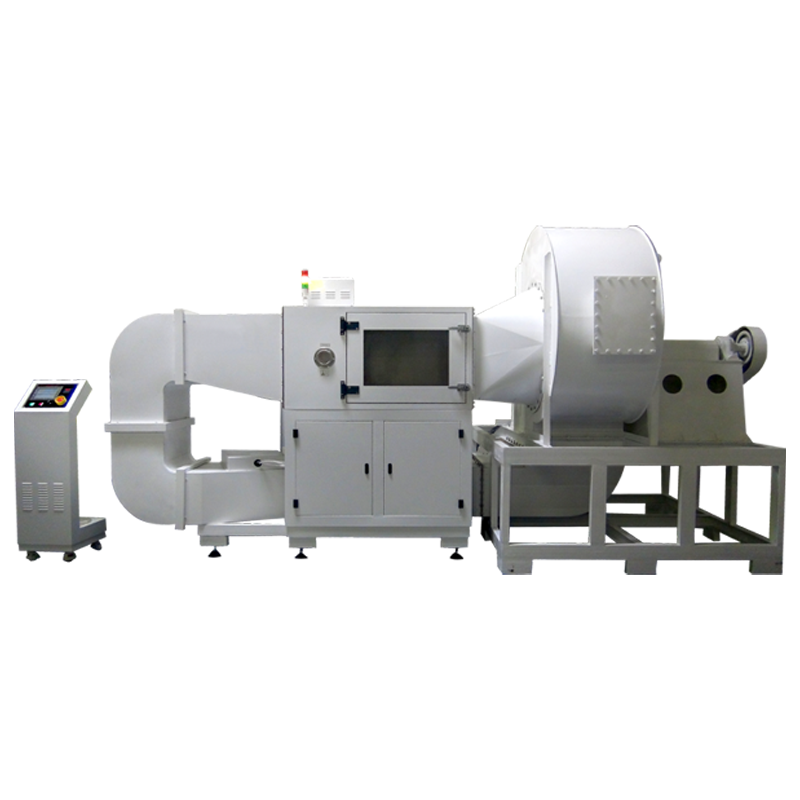
| Dimension(D*W*H)mm | 4200×2200×2000(D*W*H)mm | ||||||
| temperature range | 23℃~70℃ | ||||||
| temperature deviation | ≤±2℃ | ||||||
| Humidity range | <30%RH | ||||||
| Dust blowing air speed | 1.5~8.9 m/s | ||||||
| Sand blowing wind speed | 18.0~29.0 m/s | ||||||
| Blowing Dust Concentration | 3.0~17.6 g/m³ (10.7 ± 7 g/m³) | ||||||
| sandblast concentration | 0.18 + 0.2 g/m³;1.1 ± 0.3 g/m³;2.2 ± 0.5 g/m³ | ||||||
| Test dust | quartz dust | ||||||
| Sand Size | ≤ 149 μm to pass through a 150 μm diameter mesh. | ||||||
| viewing window | 300×300mm(Effective vision) | ||||||
| Outer case material | High quality A3 steel plate electrostatic spraying | ||||||
| Inner box material | Imported high-grade stainless steel SUS304 | ||||||
| Temperature Controller | Imported “UEC” brand temperature meter | ||||||
| standard configuration | Fuse set | ||||||
| Supply Voltage | AC380V±10% 60Hz | ||||||
| Power | 45kW | ||||||
| operating environment | 5℃~+28℃ ≤85% RH | ||||||
| Note: 1、the above data are in the use of ambient temperature of 25 ℃ and well ventilated conditions measured 2、Can be customized according to the specific requirements of the user non-standard military standard sand and dust test chamber etc 3、This technical information, if there is any change without prior notice |
|||||||







Copyright © 2025 Shanghai Linpin Instrument Co., Ltd Copyright
| ICP Number:Shanghai ICP Record No. 12029585-7
| Sitemap






 EN
EN
 中文
中文 Pусский
 Tiếng Việt
 ภาษาไทย
 پاکستانی زبان