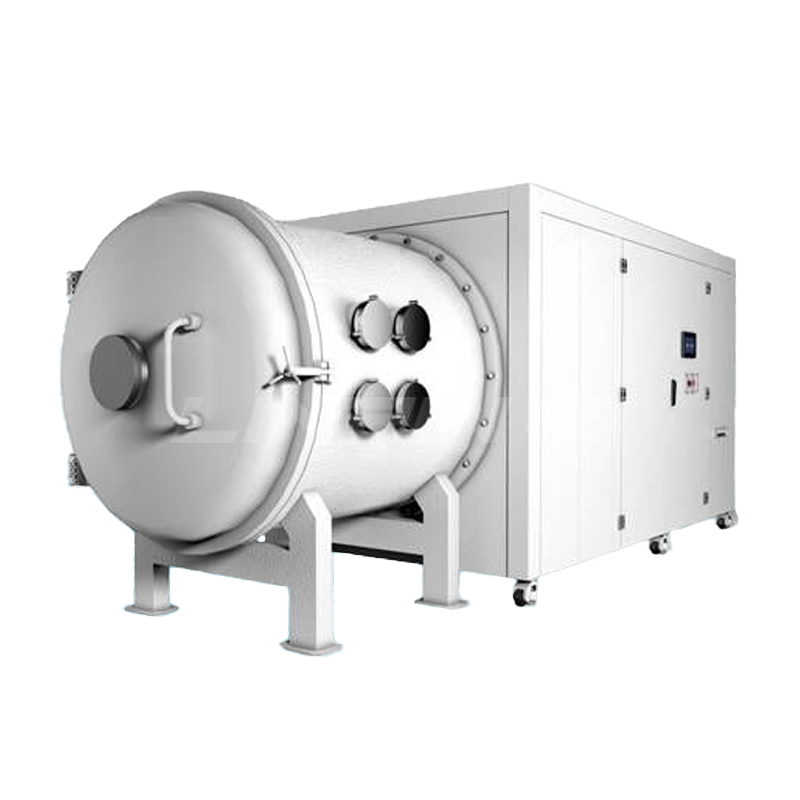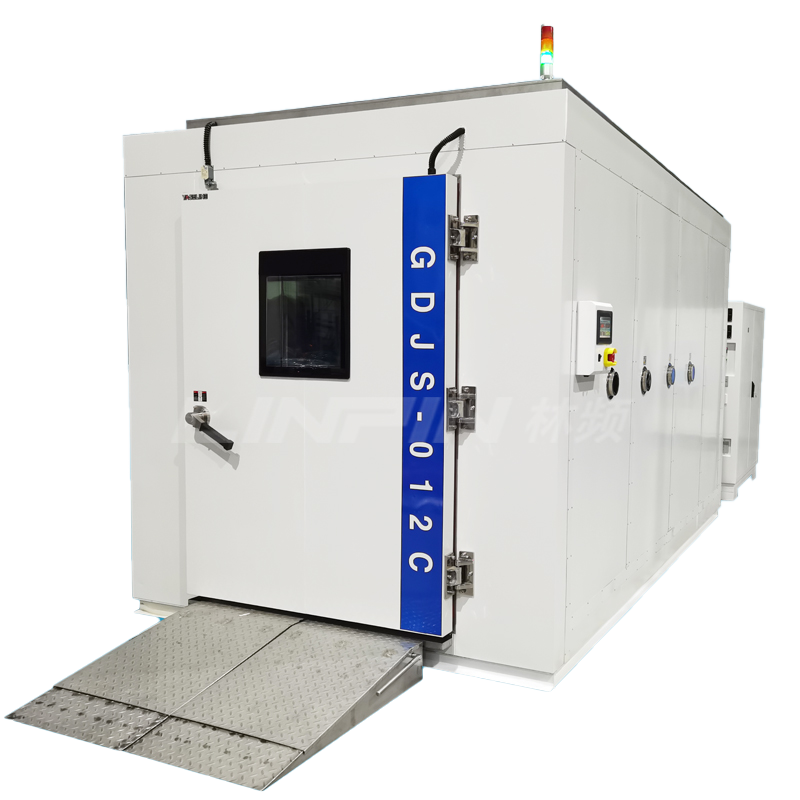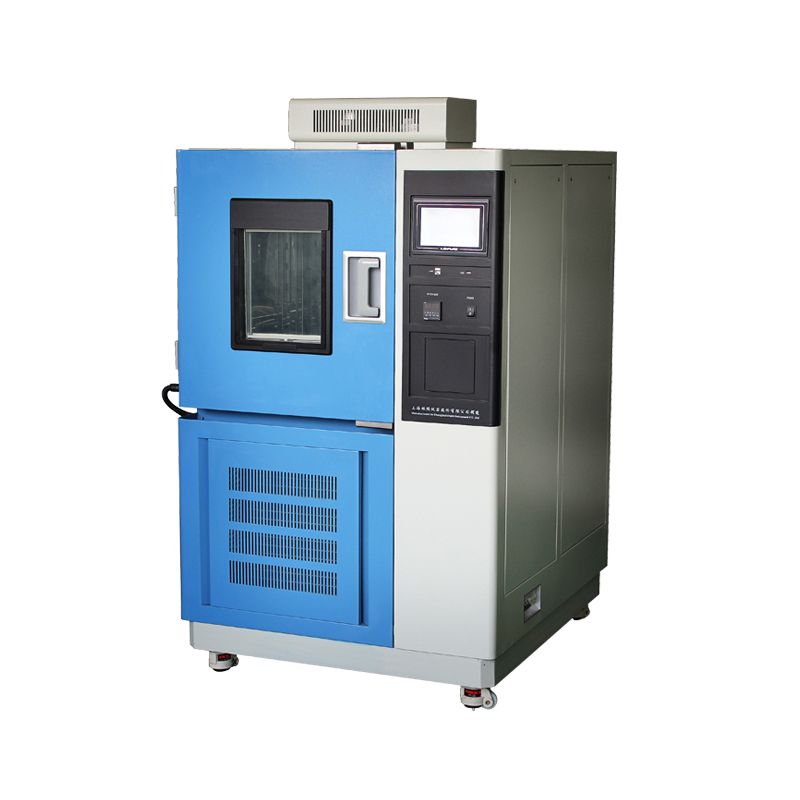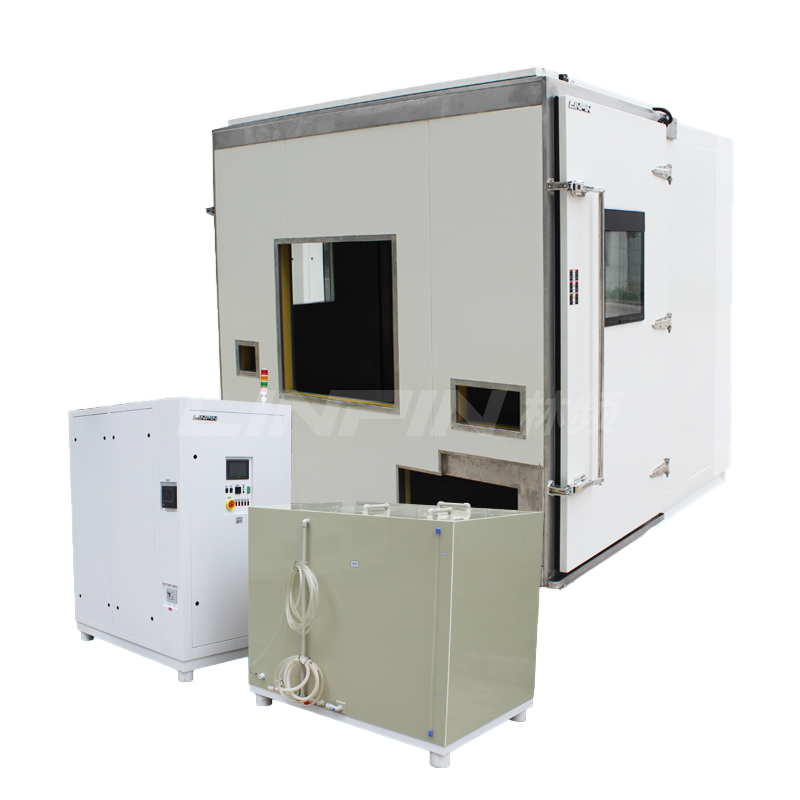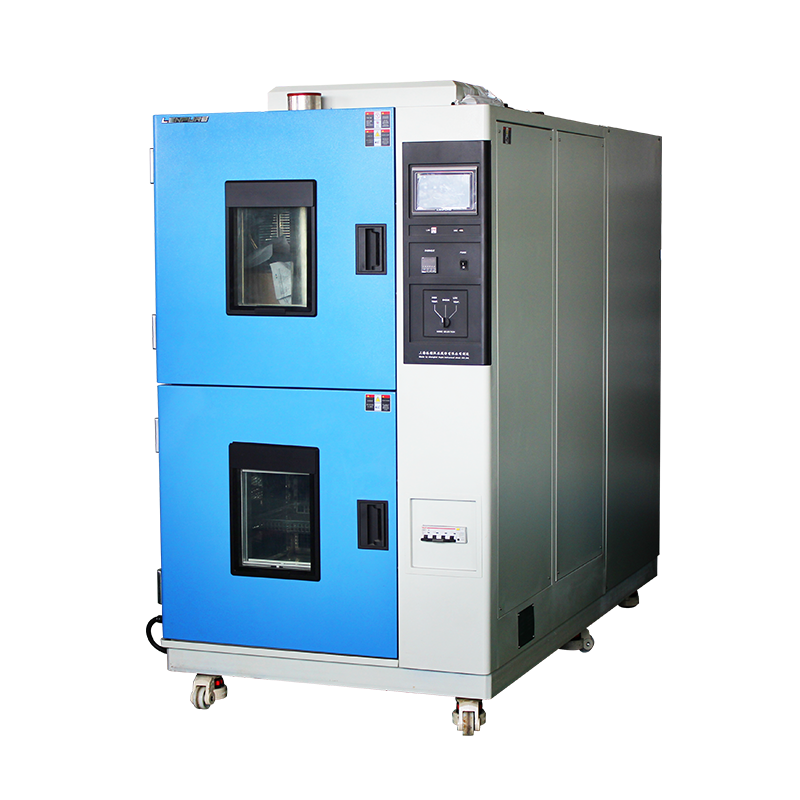






A constant temperature and humidity test chamber is a comprehensive temperature and humidity control testing instrument. If you are just starting to deal with this large and seemingly complex precision device, you might think that understanding and using it is very difficult. In this article, let’s explore how this test chamber works—specifically, its working principle.
To regulate temperature and humidity, a constant temperature and humidity test chamber must have a refrigeration system, a heating system, a humidity system, and a control system.
Refrigeration System
The refrigeration system is one of the most commonly used parts of the device. There are generally two types: mechanical refrigeration and auxiliary liquid nitrogen refrigeration. Today, we’ll focus on the most commonly used mechanical refrigeration method. The refrigerant first passes through the key component of the refrigeration system—the compressor—where it is compressed into a high-temperature, high-pressure liquid. It then goes through the condenser to be cooled down to a normal-temperature, high-pressure liquid. After that, it passes through a throttling device, and finally, it reaches the evaporator. During the evaporation process, the refrigerant absorbs heat from the device, causing the temperature inside the test chamber to continuously decrease.
Heating System
Compared to the refrigeration system, the heating system is relatively simple. It mainly uses electric heating wires to generate heat and achieve the purpose of increasing temperature. Typically, the power of the heating wires is relatively high, which allows for a faster rate of temperature increase.
Control System
The control system is the command center of the constant temperature and humidity test chamber. It belongs to the software part of the device and is used to set various values and modes through the operating interface, enabling the device to work according to a predetermined program.
Humidity System
When humidification is required, low-pressure steam is introduced into the test chamber. This process is relatively simple and easy to operate. For dehumidification, there are two methods: mechanical refrigeration dehumidification and drying dehumidification. Refrigeration dehumidification involves lowering the temperature below the dew point, causing water vapor to condense and reducing the moisture content. Drying dehumidification involves extracting the air from the test chamber, drying it, and then returning it to the chamber to remove moisture.





Copyright © 2025 Shanghai Linpin Instrument Co., Ltd Copyright
| ICP Number:Shanghai ICP Record No. 12029585-7
| Sitemap






 EN
EN
 中文
中文 Pусский
 Tiếng Việt
 ภาษาไทย
 پاکستانی زبان