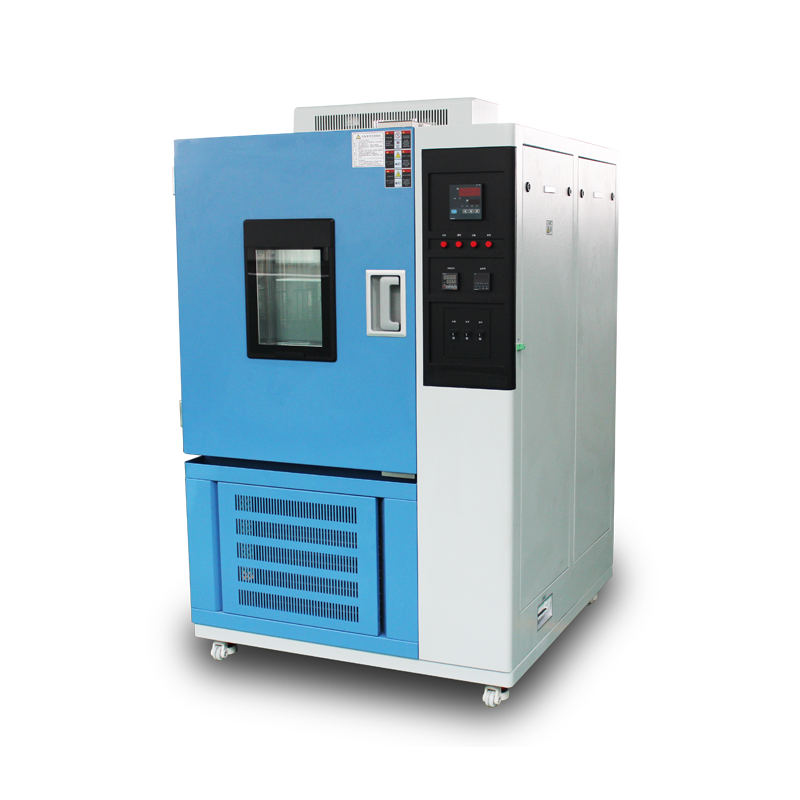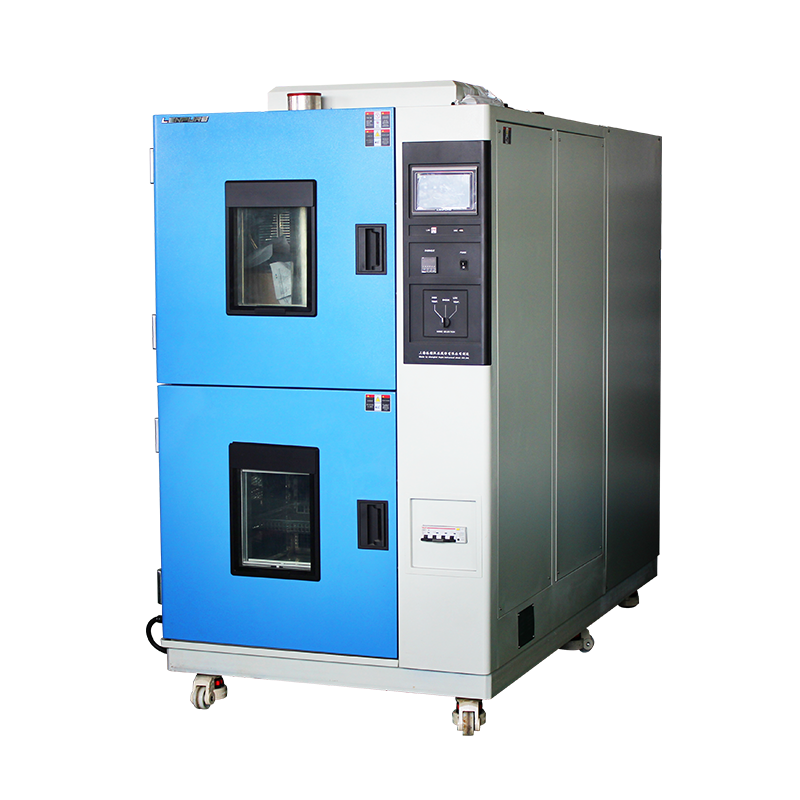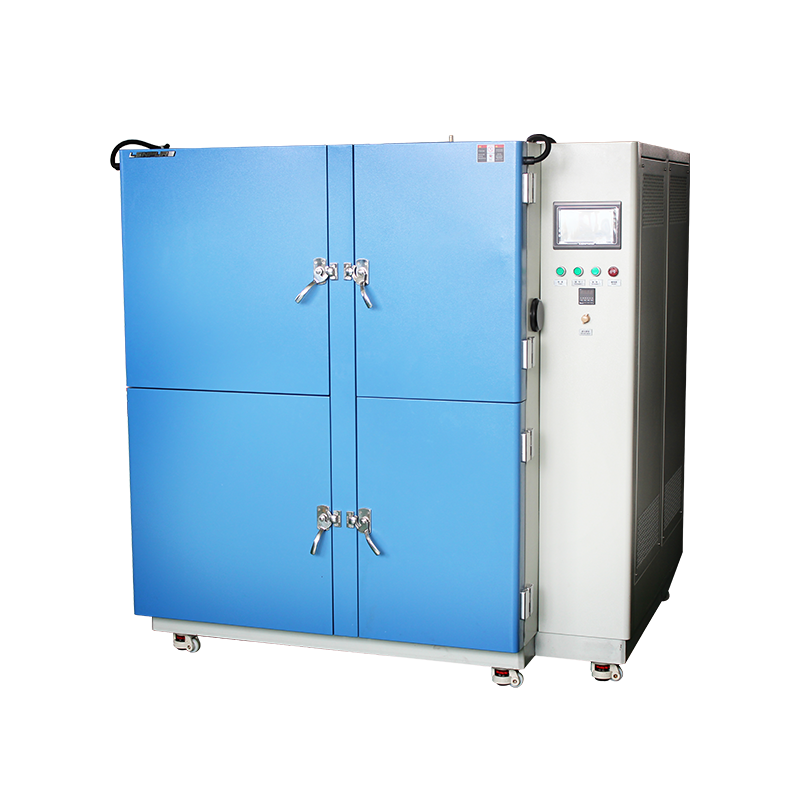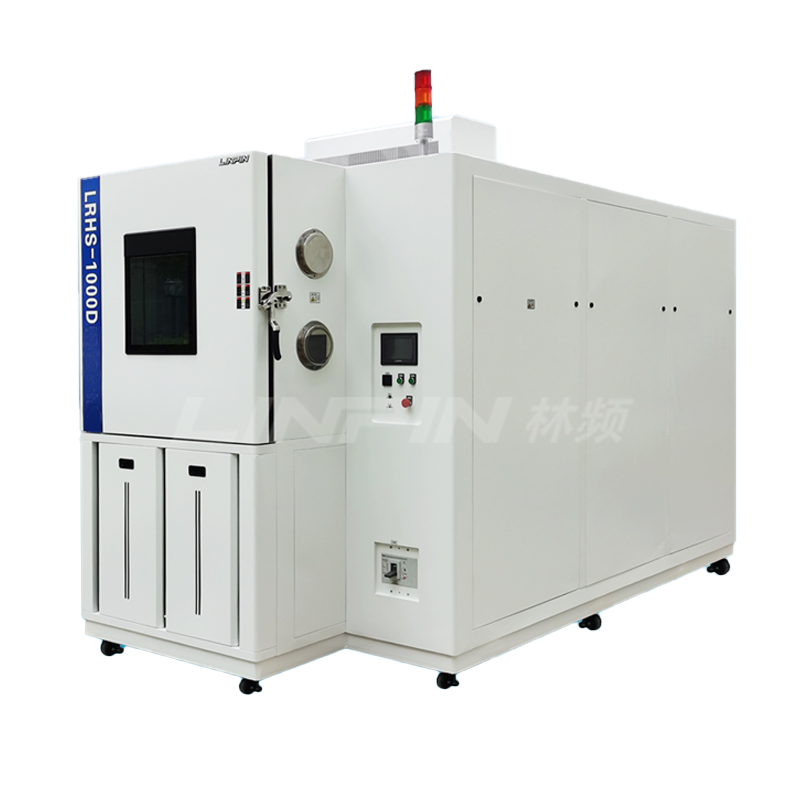




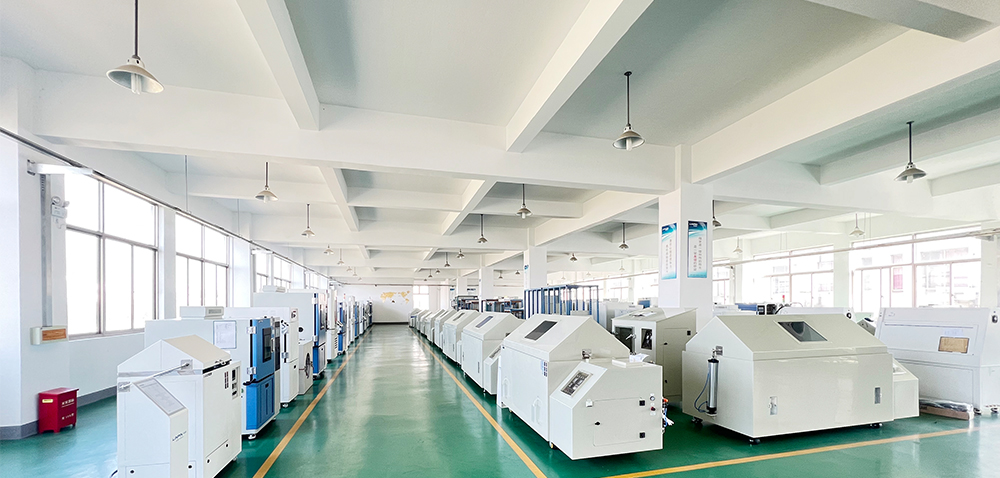


Temperature shock test chambers on the market are divided into two main types. One type is the two-chamber model, which includes a high-temperature zone and a low-temperature zone. The test objects undergo temperature shock tests in these two zones with alternating high and low temperatures. The other type is the three-chamber model, which, in addition to the high- and low-temperature zones, also has a test zone. Unlike the two-chamber model, the three-chamber model does not require direct testing in the temperature zones. Instead, it uses air compression to transfer the air from the high- and low-temperature zones into the test zone. Compared to the two-chamber model, the three-chamber model is easier to operate.
Temperature shock test chambers can be applied in various industries, including electronic components, automotive parts, plastics, aerospace, electronic chips, conductive ceramics, and more. The working principle of this equipment is to subject the test objects to temperature shock tests under different temperature conditions. By rapidly changing the temperature in a short period, it creates a testing shock to determine the extent of damage and the tolerance of the test objects under extreme temperatures. Typically, during thermal expansion and contraction, the test objects may suffer physical and chemical damage. The damage caused during the test is used as a basis to further reduce the extent of damage to the test objects under extreme temperatures.
The main feature of the temperature shock test chamber is its ability to rapidly change temperature in an extremely short period. It can simulate natural environmental conditions, such as shifting from a high-temperature environment of 100°C to a low-temperature environment of -60°C within just a few seconds. This capability increases the efficiency of testing and saves costs.
Different test conditions require different types of equipment, and the appropriate device should be chosen based on the specific situation. In the initial research and development stage, the temperature shock test chamber can help identify potential weaknesses of a product early on, such as whether it can maintain normal operation under extreme temperatures. This allows for early improvements to prevent significant losses after mass production. Using environment and temperature as screening criteria can help produce products with better performance.






Copyright © 2025 Shanghai Linpin Instrument Co., Ltd Copyright
| ICP Number:Shanghai ICP Record No. 12029585-7
| Sitemap






 EN
EN
 中文
中文 Pусский
 Tiếng Việt
 ภาษาไทย
 پاکستانی زبان