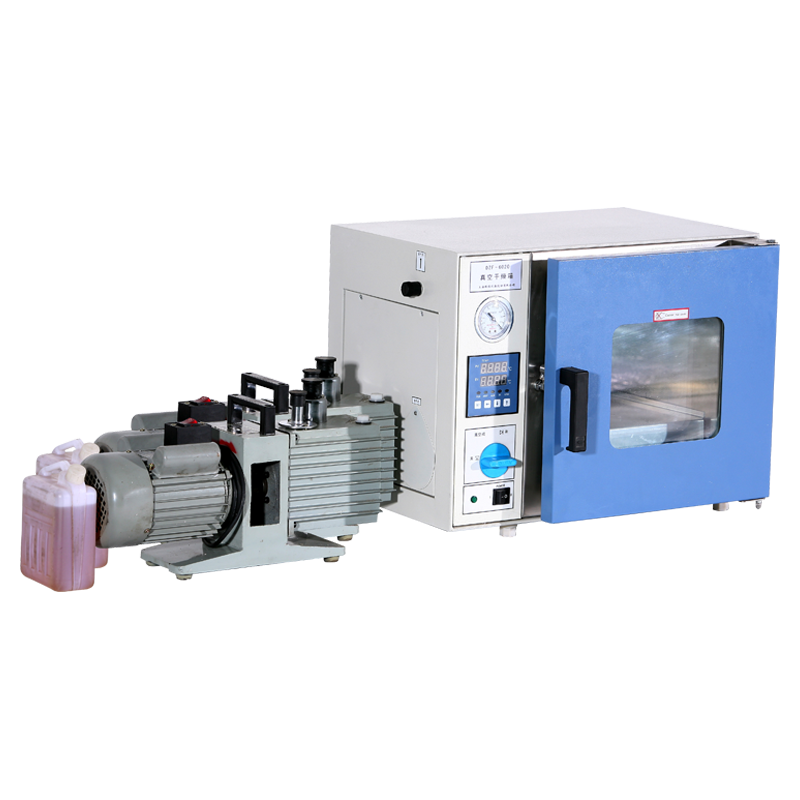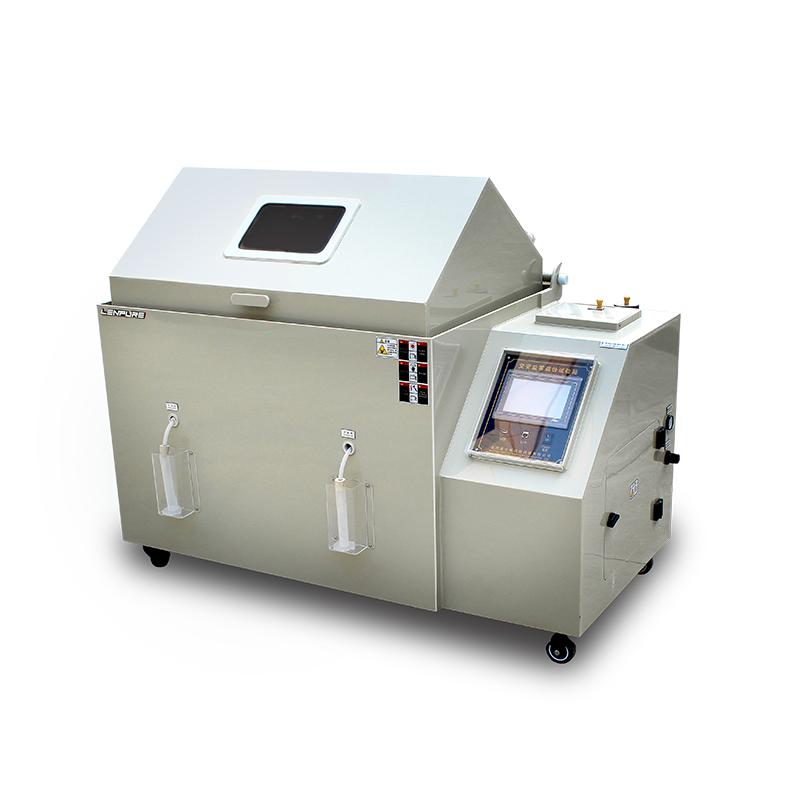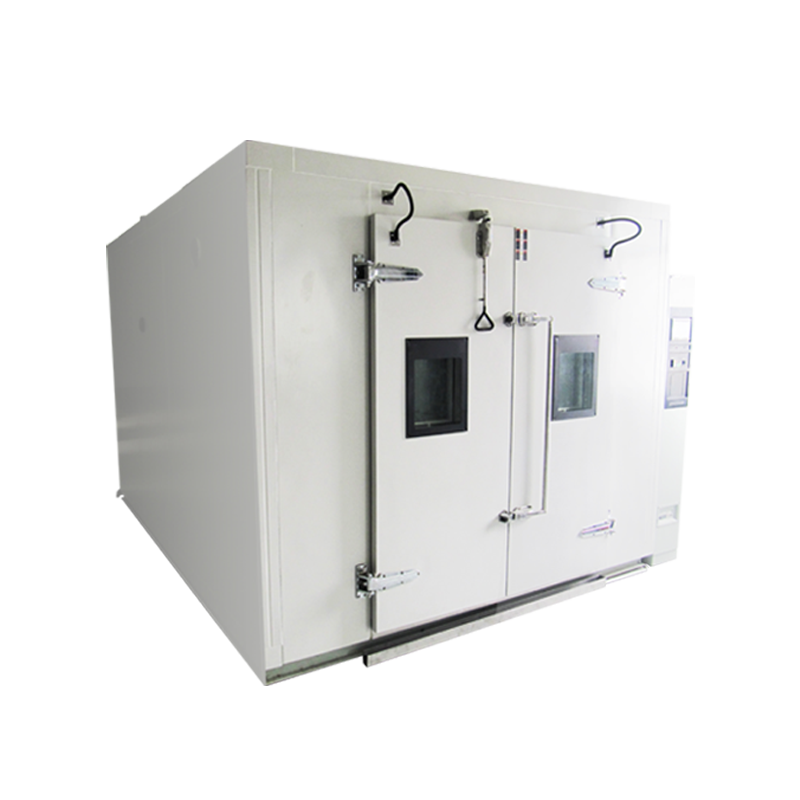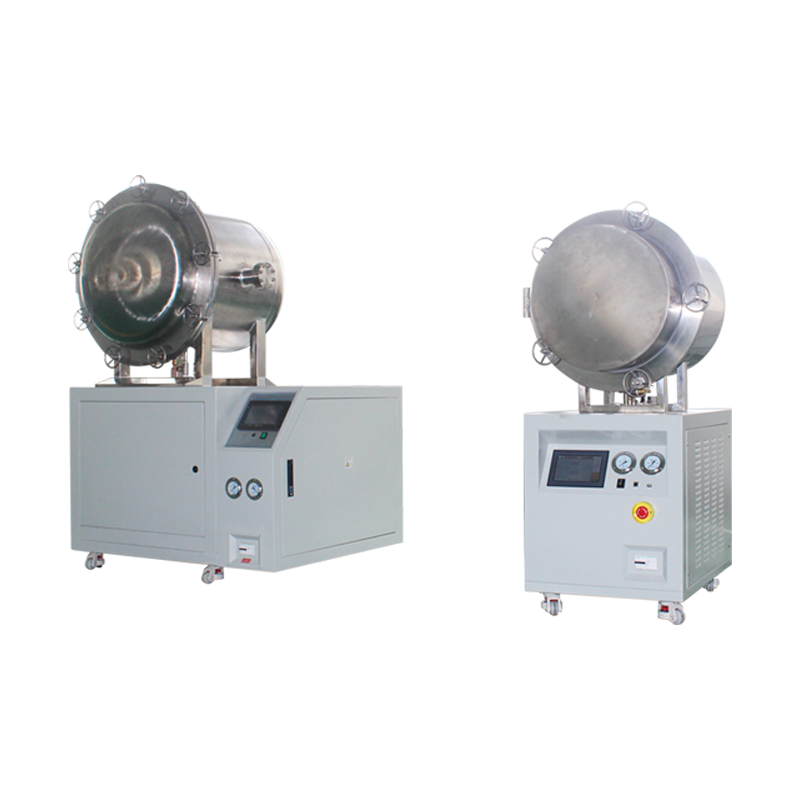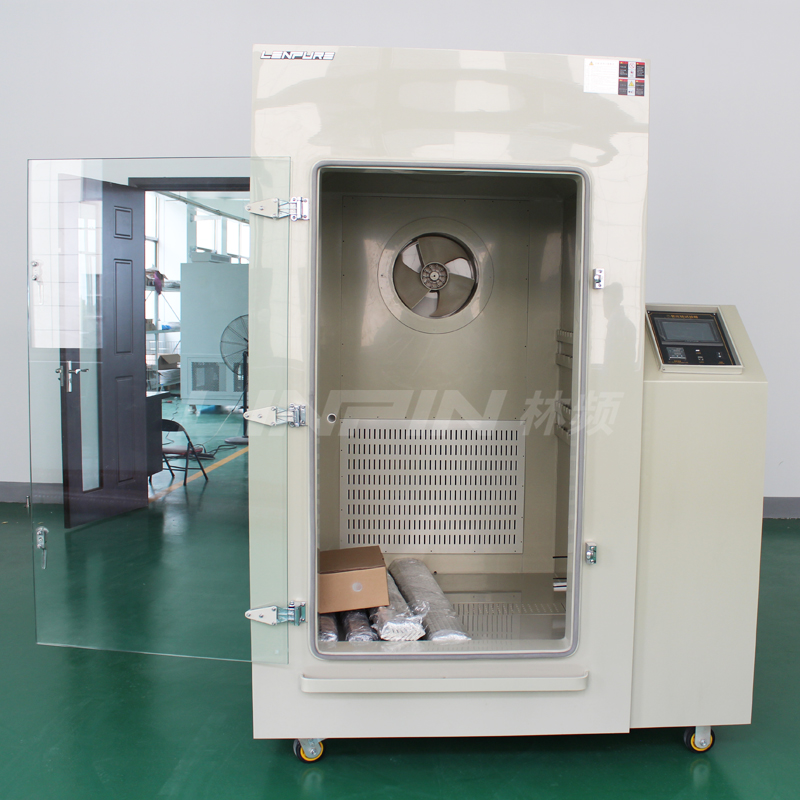




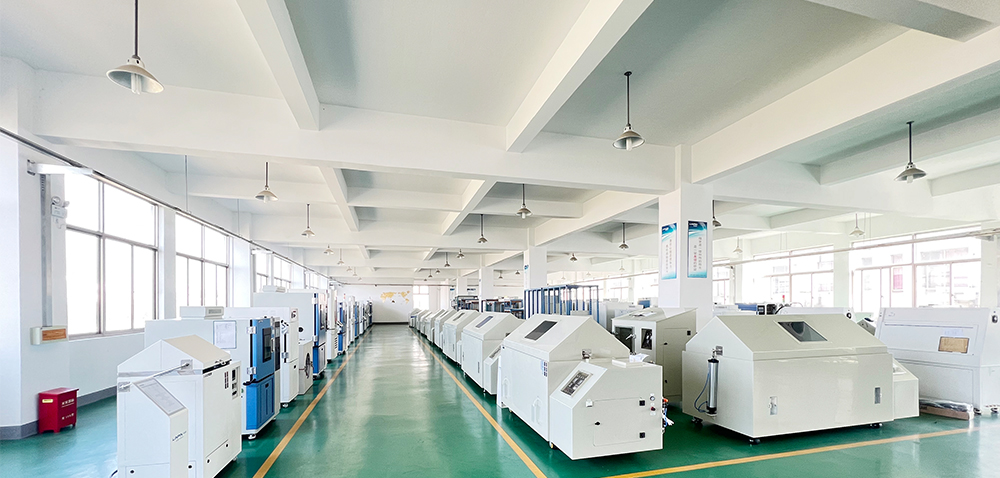


Rain test chambers simulate water exposure environments to evaluate the waterproof performance of objects. Everyday items such as exterior lighting fixtures, automotive lamp housings, electronic products, and signaling equipment can be tested using this device to assess their waterproof capabilities. After understanding the purpose of this testing equipment, let’s explore its structural features.
Large Transparent Glass Door: To facilitate real-time observation of the test conditions inside the chamber, rain test chambers are typically equipped with a large-area transparent glass door.
Material Composition: The inner chamber is usually made of stainless steel with a smooth finish, while the outer shell is treated with a brushed stainless steel plate.
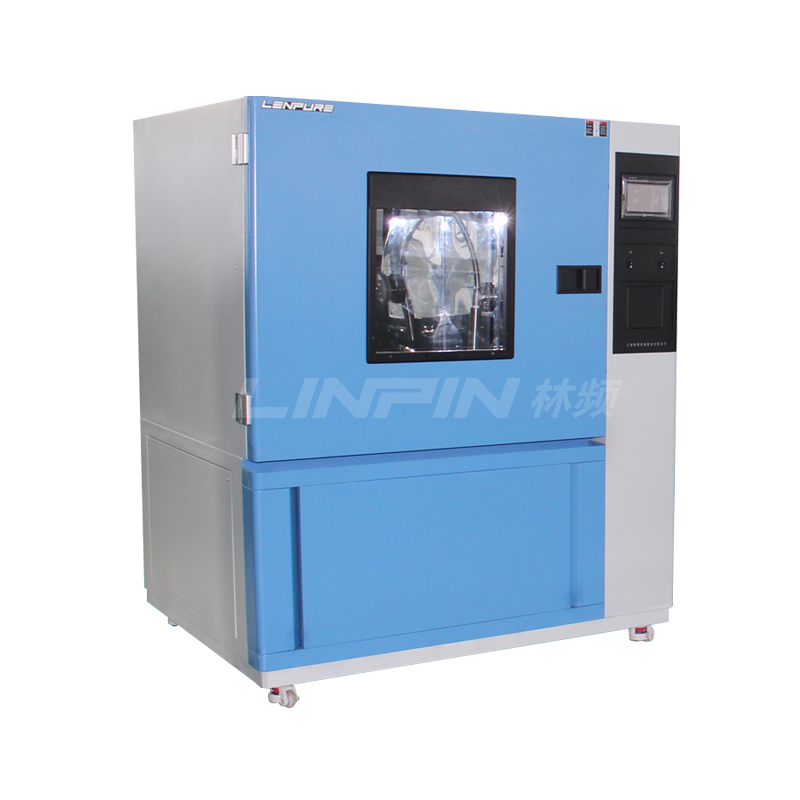
Bottom-Mounted Components: The bottom of the chamber houses the swing arm drive mechanism, rotating worktable system, water spray device, and water storage tank. The worktable surface is made of stainless steel and is driven by a motor, with the speed adjusted by a reducer. The swing arm control system employs automated operation, using a stepper motor, and allows the swing angle and speed to be set via the control panel.
Nozzle Design: The radius of the swing arm’s curvature is determined based on the size of the test sample and the chamber’s internal volume. The nozzle is foldable, and the spray hole can be replaced according to the required standard aperture. The spray direction can be adjusted to ensure uniform water droplet distribution and sufficient water flow.
Door Handle: The chamber is equipped with a non-reactive door handle for easier operation by personnel.
Water Supply System: The chamber uses a water pump for supply, equipped with a pressure-regulating valve. The water tank includes components such as an inlet float valve, drain valve, and water filter. If heating is required, an electric heating tube and temperature controller can be installed in the tank. A drainage channel at the bottom of the chamber ensures quick water discharge to prevent accumulation.
Mobility Features: Considering potential relocation needs, the chamber is fitted with lockable PU casters for easy movement.
The above provides an introduction to the uses and structural features of rain test chambers. For more details, please visit our company’s website and stay tuned for updates.


25.03


25.04


Copyright © 2025 Shanghai Linpin Instrument Co., Ltd Copyright
| ICP Number:Shanghai ICP Record No. 12029585-7
| Sitemap






 EN
EN
 中文
中文 Pусский
 Tiếng Việt
 ภาษาไทย
 پاکستانی زبان